PARTICIPATORY DEMOCRACY vs REPRESENTATIVE DEMOCRACY
We as citizens of the United States observe politics from afar and the vast majority of us may participate in the political process only to the extent that we go to the polls once a year to vote. We may endeavor to follow the news accounts of our nation's politics as they unfold, and of the consequences those political actions yield, but we have little power to influence our "democratically" elected officials. Perhaps we write an occasional letter to our senator or representative, but we almost inevitably receive a vague and impersonal response explaining why they will vote in our opposition.
Over the decades, our representative democracy has been systematically undermined and has ultimately failed in preserving the well being of the people of this nation. The system that the founding fathers painstakingly devised in order to best serve the interests and the will of the people has been corrupted and the systems of checks and balances on power that they instituted have been stripped away. Most of us accept this reality as being beyond our control and continue to observe, comment, and complain without aspiring to achieving any real change, without any hope of instituting a new system of governance that would instead take directly into account your views, and the views of your neighbors, and would empower you to make real positive change possible in your communities.
This site will attempt to explore in depth the places in the world where people are successfully bringing about that type of change in the face of similar odds, where an alternate form of democracy, which is called participatory or direct democracy, is taking root. Initiative, referendum & recall, community councils, and grassroots organizing are but a few ways in which direct/participatory democracy is achieving great success around the world.
Our system of representative democracy does not admit the voice of the people into congressional halls, the high courts, or the oval office where our rights and our liberties are being sold out from underneath us. Our local leaders and activists in our communities, and even those local elected officials who may have the best of intentions are for the most part powerless to make real positive change happen in our neighborhoods, towns and villages when there is so much corruption from above.
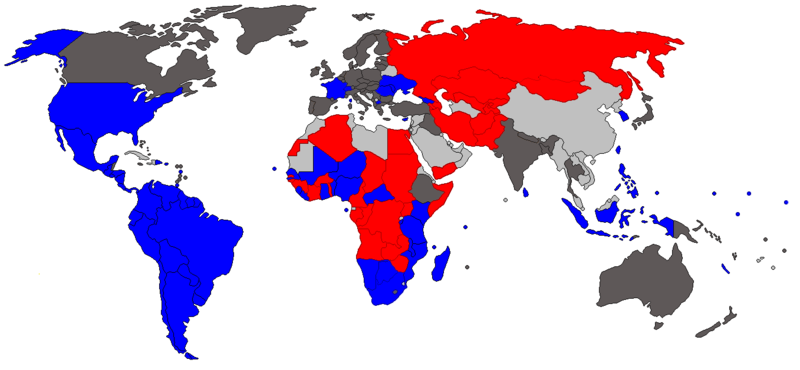
In places like Venezuela, Argentina, Bolivia, Nicaragua, Ecuador, Brazil, South Africa, India, and the Phillipines, new experiments in grass roots community based governance are taking place. There is much to be learned from these and other examples of participatory democracy from around the world when we try to examine how this grass-roots based governance could begin to take root here in our own country in order to alter our political system so that it might better serve the American people.
In the hope that one day we can become a nation working together as a united people practicing true democracy as true equals, we open this forum…

Green Party sets its roots for 2010
Published Monday November 17th, 2008
Mike Milligan acclaimed as interim leader at founding convention
A4by dwayne tingley
times & transcript staff
Source: http://timestranscript.canadaeast.com/news/article/483165
Mike Milligan called it an historic day and he expects politics in New Brunswick to never be the same.
New Brunswick's Green Party took its first steps toward fielding a full slate of 55 candidates for the next provincial election in 2010 Saturday at its founding convention at the Université de Moncton student centre.
The day-long convention attracted about 30 participants and 22 voting delegates who unanimously acclaimed Milligan, a 51-year-old small businessman from Shediac River, as its interim leader.
"This is grassroots democracy," said Milligan, who operates a motorcycle shop in Moncton.
"For years, it has been obvious the existing political parties have not been listening to the people, but the Green Party offers participatory democracy, where everyone has a say and the people speak for the government."
Delegates spent most of day debating and ratifying the party's constitution, which includes bylaws covering everything from how their leader will be chosen to how members will be notified of upcoming meetings.
The party expects to hold its first leadership convention next spring. Until then, efforts will be made to organize associations in each of the province's 55 ridings.
Milligan, who was the Green candidate in the federal riding of Beausejour in the recent federal election and collected almost 3,200 votes, said the party has a solid foundation and predicted it will continue to grow.
"We got 22,000 votes (about seven per cent) in New Brunswick in the last federal election so people are hearing our message," Milligan said.
"We've been well-represented in southern New Brunswick, but we have to be better organized in the northern part of the province," he said. "We're hoping more people step forward and help us out now that we have had our first convention and things are coming together."
The party also elected its first executive at the meeting and long-time director of Conservation Council of New Brunswick Janice Harvey of Waweig, near St. Stephen, was chosen president.
Francoise Aubin of Dieppe and Stephanie Coburn of Sussex will serve as vice-presidents while Pierre Roy of Moncton will be the secretary and Leona Davies of Fredericton will be treasurer.
Executive members at-large are: Art Hacking of Memramcook, Beth Stymiest of Riverview, Marco Morency of Moncton, Mathieu Bourgeois of Moncton and Mary Ann Coleman of Waterford, near Sussex.
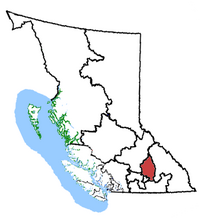
Unfortunately this candidate from British Columbia who is a strong supporter of direct democracy only received one percent of the vote in the recent Canadian elections which saw gains for the conservative party. - Editor
Seymour spreading awareness
Published: October 09, 2008 6:00 PM
Updated: October 09, 2008 6:21 PM
Source: http://www.bclocalnews.com/okanagan_similkameen/vernonmorningstar/community/30723499.html
This is the last in a series of profiles on Okanagan-Shuswap candidates for the Oct. 14 federal election.
Darren Seymour of the Canadian Action Party says Canadians need to turn off the television and learn what is happening in their country.
Running in the federal election for the second time, Seymour says Canadians should be aware that over the past 50 years, Conservative and Liberal governments have given control of the country over to multi-national corporations.
“The feds have handed over the most sacred, crucial responsibility that a government has and that is creation of money for the country,” he says emphatically. “ Most people don’t understand money has to be created and as country grows more money has to be created. It is the most vital factor that determines the health of the country.”
He insists the majority of the money is being created as debt by the private banking industry.
Seymour also believes Canada’s sovereignty is being destroyed with deals like Free Trade. He charges that the deal had nothing to do with free trade, but was a corporate bill of rights.
“Now there’s the Security Prosperity Partnership, which is being created as quietly as possible,” he says. “This is seriously going to destroy the ability of Canada to make decisions about its own future.”
Instead, Seymour cautions the country will be dictated to directly by the biggest corporations in North America. He says Canadian taxpayers are mostly unaware that they are paying for 20 working groups “that are integrating and harmonizing all aspects of Canada, the U.S. and Mexico into a North American union, benefiting the biggest corporations and not benefiting small business or the Canadian people.”
Another key point Seymour says his party would address is the presence of the Canadian Forces in Afghanistan, something he says was built on U.S. administration lies perpetrated by large media outlets.
“There’s overwhelming evidence 9-11 was carried out by elements inside the U.S.,” he says. “People have to take responsibility to discover the truth if we’re going to take our country back.”
Seymour recommends voters visit globalresearch.ca before they decide how to vote.
A stock trader by profession, Seymour became interested in politics about 10 years ago when he delved into the banking system..
“It was my first awakening that things are not the way they seem. There’s lots of underlying stuff going on that we don’t know about,” he says. “It evolved from there, I became more aware and started doing research and learning.”
He says the more he learned, the angrier he got, and the more he wanted to get involved.
“I wanted to do something to engage in the world I live in.”
Seymour started an organization called Our World Community Collective, which was designed for people to learn collectively about their governments. He also designed a voting system that would allow voters’ concerns to be heard.
In his direct democracy system, members of the group identify their top concerns, with action taken on the issues most frequently addressed.
“If I am elected, I will donate 75 percent of my salary to the direct democracy system, where we can learn together and vote on what we want to do about it,” he says.
“The Canadian Action party is the only solution to get us out of this downward spiral.,” he says.

This story of a lucky entrepreneur who was able to fund his idea to bridge the government and civil society through participatory assemblies is certainly unique. The fact that he was able to get private funding for a grassroots project is exceptional. If only more individuals were willing to fund these kinds of initiatives, citizens would be more inclined and likely to participate. Seeing as participators currently struggle as volunteers, funding would add extra motivation but it also would pose risks to equal and fair access to participatory mechanisms. This case asks us to consider these points. -Editor
Hooked on democratic process
May 19, 2008 04:30 AM
CAROL GOAR
Something fragile but remarkable is rising from the ashes of Ontario's Citizens' Assembly on Electoral Reform.
It is not another blueprint for proportional representation. Voters made it clear last October that they weren't in the market for one of those.
It is an appetite for democracy. Ontarians – at least a lucky few – are discovering that they like having a say in how they are governed.
Peter MacLeod, a young entrepreneur who got hooked on collective decision-making during the citizens' assembly, is determined to keep the process alive. He has set up a storefront company to "reinvent public consultation."
It's called MASS LBP. "MASS" is short for mass public. "LBP" stands for led by people.
The company has six employees, all young, all highly educated and all fiercely committed to the proposition that government by the people for the people works.
Their headquarters is a former art gallery on King St. E. They renovated it with supplies from Home Depot and a lot of elbow grease.
The company has just completed its first contract, a citizens' health assembly in Kingston. Its purpose was to set priorities for the region's new health authority (officially known as the South East Local Health Integration Network).
Fifty-four volunteers took part. They came as strangers and left as friends. The vast majority – 97 per cent – found the exercise useful and enjoyable. The regional health authority ended up with a blueprint that reflected the values and wishes of the community.
MacLeod and his colleagues are in Markham this week, discussing the possibility of a citizens' health assembly for the northern section of Toronto, York region and part of Simcoe region (the Central Local Health Integration Network).
But they don't want to confine their activities to the health-care sector. They envisage holding citizens' assemblies on everything from municipal water rates to cross-border pollution.
"I think there's a demand to go beyond polling and focus groups and town hall meetings," MacLeod says. "We want our projects to be seen as the Canadian model of civic engagement."
Citizens' assemblies work best on issues that are politically radioactive, not well understood or stuck forever on a back burner, MacLeod says. "We take participants through a learning phase, a deliberation phase and a consensus phase. We see this as the way to create legitimacy for government action."
Thanks to an angel investor – George Gosbee of Calgary – MacLeod has funding to keep the company going for 18 months. He thinks that will be long enough to prove the model works and find enough clients to make it self-sustaining.
"We have to make a profit because that's the measure of our relevance."
MacLeod was thrilled but astonished when Gosbee, chairman and chief executive of Tristone Capital, agreed to bankroll his "crazy idea." He'd met Gosbee at a speaking engagement at the Alberta College of Art and Design and the two had clicked. But he never expected the investment banker to buy half his company so he could market-test his brainchild.
MacLeod won't say how much Gosbee put in – "it wasn't a princely sum" – but makes it clear he's running the company on a shoestring. He and his colleagues, all of whom have postgraduate degrees, earn $45,000 a year.
For their first few months, they worked out of the living room of MacLeod's apartment with their laptops and cellphones.
They're proud they now have an office and pleased that their Kingston forum is getting good reviews. But they dream of becoming an all-purpose bridge builder between governments and the public, winning international contracts and having their projects copied by other firms.
Participatory democracy is one of the oldest ideas in political theory, MacLeod acknowledges. But it has fallen into disuse in North America. Governments have become distant and impenetrable. Citizens are passive and self-absorbed.
What gives him faith is the answer he gets when he asks people why they don't speak up or get involved. "No one ever asked me."

The following is a press release from a new political party being launched in Atlantic Canada that favors direct democracy and citizen participation. To learn more about the party, visit their website:
http://www.atlanticaparty.ca/
- Editor
FOR IMMEDIATE RELEASE:
The Atlantica Party announces the start of its campaign to achieve official provincial party status in Nova Scotia.
HALIFAX, Nova Scotia, March 12, 2008 - The Atlantica Party today has started its campaign to achieve official provincial party status in Nova Scotia. Central to the campaign is a series of public meetings where citizens can learn about and ask questions of the Atlantica Party. Along with this the Atlantica Party is officially accepting party memberships for the first time.
The meeting schedule is available online at
www.atlanticaparty.ca/html/events.html
"This is the start of the mass movement for change in Atlantic Canada," said Jonathan Dean, leader of the party. "It is critical that we meet with and be questioned by citizens all over the province in order to build our credibility and to explain our policies of electoral reform, political reform and a debate on Atlantic Union. Nova Scotia is just the start, we will be initiating similar campaigns in the other three Atlantic Provinces in the future."
The Atlantica Party will advance a debate on Atlantic Union. The Atlantica Party will also reform the provincial political system by re-establishing the independence of the Legislature. This sharing of powers between the citizen's representatives in the Legislature and the Executive will encourage freer debate, better decision making, and establish stricter public oversight of government operations. The Atlantica Party will also institute several direct democracy tools for use by citizens, including Citizen's Initiative and Recall.
The Atlantica Party will introduce British Proportional Representation (also called STV) for provincial elections and ban election contributions from all sources in favor of equal election financing for each candidate. Citizens shall also be able to vote directly for a Premier. These reforms are needed to ensure fairer elections, allow more political voices to be heard, encourage citizens to become engaged in elections, and present voters with more electoral choice.
The Atlantica Party is committed to Atlantic Rights and increasing the voice of the region within Confederation in order to reverse the neglect of this region by the Federal Government.
What is the Atlantica Party?
The Party is a provincial party in each of the four provinces of Atlantic Canada. We represent Nova Scotia, New Brunswick, Prince Edward Island, and Newfoundland and Labrador. The Party is a reforming party that is from outside the system and has no stake in the current status quo.
Who are we?
We are a small group of private citizens with big ideas concerned with the future of Atlantic Canada.
Who are we affiliated with?
The Atlantica Party is completely independent, made up of unaffiliated private citizens. We are not affiliated with nor receive funding from any corporations, special interest groups, other political parties, or any level of government. And never will.
Briefly what is you policy package?
- Free The Legislature.
- Allow Citizen's Initiative.
- Allow Recall.
- Use British Proportional Representation (STV) for elections.
- Equal Campaign Funding.
- Direct Election of the Premier.
- A debate on uniting Atlantic Canada into a single province within Canada.