This interesting piece from the Philippines looks to the direct democracy of initiative & referendum at the state level in the United States as an example for the Philippines to follow. - Editor
Direct Democracy
Pinoy Kasi
By Michael Tan
Philippine Daily Inquirer
First Posted 02:06:00 11/05/2008
Source: http://opinion.inquirer.net/inquireropinion/columns/view/20081105-170283/Direct-democracy
The media frenzy around the US elections has mainly focused on the presidential race, and for good reason, considering the role American presidents play in charting the world’s future. This election is also particularly significant because we just might see the first African-American president.
But I’ve followed the elections also because they show how democracies work. Beneath the glitter and glamour, presidential elections allow substantive discussions of issues that matter to Americans, and to the world.
Few people are aware of another important part of American elections, that of referendums which allow citizens in some states to make some very vital decisions. In the Philippines, we also have this system of citizens’ initiatives but it hasn’t worked out, so maybe we should look more closely at what goes on in the US.
Burning issues
The issues taken up in these referendums reflect the burning issues of the day for Americans. This year, the most hotly debated propositions to be voted on revolve around abortion and same-sex marriage but there are initiatives around taxes, education, animal welfare and energy. California, for example, has two initiatives around alternative energy, including one that requires utilities companies to generate 20 percent of its power from renewable energy by 2010, 40 percent by 2020 and 50 percent by 2025.
The propositions also reflect how liberal or conservative a particular state might be. For example, 26 states have passed DOMASes or “Defense of Marriage Amendments,” which define marriage as a union of a man and a woman. These amendments are intended to block same-sex marriage, which is currently allowed in three states: California, Connecticut and Massachusetts. In this year’s elections, three states—Arizona, California and Florida—will be voting on a DOMAS (note that California already allows same-sex marriage so their new initiative is intended to overthrow that law).
Abortion has been legal in the US since 1973 but individual states have been looking for ways to impose restrictions. This year, there are three states with abortion-related initiatives. Colorado has a “Defense of the Person Initiative” which would bestow personhood status from the moment of fertilization, giving the fetus “equal rights of life, liberty and property.” If passed, this act would make abortion a crime equivalent to murder and homicide. South Dakota will vote on a constitutional amendment that will ban all abortions except for rape, incest or to protect women’s health. California has a proposition that will require parents of a minor to be notified, with a 48-hour waiting period, after that notification, before the minor can have her abortion.
It’s a powerful system of direct democracy—direct in the sense that citizens themselves make very important decisions, rather than leaving it to elected officials and legislators. At present, 18 states allow citizens to exercise direct democracy to amend a state constitutions, 22 allow citizens to initiate new laws or statutes and in 25 states, citizens can even overthrow or veto a state statute that has already been passed.
The process usually begins with citizens themselves gathering signatures for a petition to put an issue to a vote. The rules vary from one state to another, requiring a certain number for the petition to finally make it to the ballot. For example, California, for a proposition to revise a law, the number of signatures required to put it to a vote is equivalent to 5 percent of the total votes cast in the last election for the governor. To amend the constitution, the requirement is 8 percent.
Not all these initiatives begin with citizens. Some states have a system where the legislators themselves refer an issue to the public for approval.
It’s not easy to get these propositions to the point of a referendum. Gathering petitions is tedious work, and can be challenged by other citizens’ groups. Law suits have been filed against some of these propositions, effectively stopping them from being voted on.
If the propositions are eligible for a vote, the office of the secretary of the state has to put together materials to help citizens make an informed decision. Information materials (in print, and lately, even in audio for those who are visually impaired) are disseminated, explaining the pros and cons involved. This includes a discussion of the issue itself, but can go on to an extended examination of other implications, for example, the cost of enforcing the new law or lost income in terms of taxes. The materials also list people, groups, even newspapers that have endorsed or opposed the initiative. The main sponsors of the initiative are also put under scrutiny for possible vested interests.
Animal rights
There are many other initiatives that are going to be voted on in this election. As an educator, I was intrigued by Oregon’s Measure 60 where teachers’ classroom performance would determine pay raises.
Massachusetts has a Sensible Marijuana Policy Initiative, which would decriminalize small amounts (less than one ounce) of marijuana. Proponents say this would save $130 million a year in court and imprisonment costs, but those opposed, organized as a Coalition for Safe Streets, say such decriminalization would send a wrong message to young people.
Animal rights have become a big issue in the US and are reflected this year by three initiatives. California has Proposition 2, which requires that “calves raised for veal, egg-laying hens and pregnant pigs be confined only in ways that allow these animals to lie down, stand up, fully extend their limbs and turn around freely.” Massachusetts has an initiative that would ban the racing of dogs, specifically greyhounds.
Then there’s Alaska’s Wolf and Bear Protection Act, which went up for a vote a few weeks ago, during the primary elections, and was defeated. This was a referral, sent by state legislators to the public, which would have prohibited “shooting of free-ranging wolf, wolverine or grizzly bear on the same day a person has been airborne.” The law was proposed because hunters have been using aircraft to spot the animals before going after them.
The Philippines has Republic Act 6735, which allows these citizens’ initiatives, but we’ve seen it used repeatedly, from Con-con to Con-ass, by politicians looking for ways to amend the Constitution so they can stay in power. The Action for Economic Reform website has a good, brief critique of the law as “defective legislation,” making the propositions “easy to initiate, difficult to pass.” The problem is informed choice: being able to get enough information and education materials out to voters, rather than letting them be manipulated by politicians.
Sunday, November 9, 2008
PHILIPPINES: Looking to U.S. Direct Democracy as Example

Friday, October 31, 2008
Philippines: Struggling with Direct Democracy
 Valdehuesa: Ignorance makes ours a “bonsai” republic
By Manuel Valdehuesa
Monday, September 15, 2008
Street Talk
Source: http://www.sunstar.com.ph/static/cag/2008/09/15/oped/manuel.valdehuesa.street.talk.html
We’ve dealt with the barangay as a government, as a corporation, and as an economy. Anyone who doesn’t know why these three aspects are important or how each is supposed to be managed has no business demanding or preaching about good governance. And any official who doesn’t know how to make each one functional has no business staying in office.
What's your take on the Mindanao crisis? Discuss views with other readers
It’s been over a decade and a half since the Local Government Code of 1991 became law. It was meant 1) to correct the imbalance of power between the national and the local, 2) to lessen excessive centralization at the top, 3) to devolve what properly should be exercised by the intermediate and primary levels of government, and 4) to empower the community by giving the people an official role in overseeing its affairs.
But while the first three are substantially operative, the fourth and most important for the proper functioning of democracy – empowerment -- has been ignored. The people are still uninvolved, powerless, unable to participate in governance. Instead they are controlled and manipulated by the barangay chairman and his cohorts. And it’s all due to ignorance.
Ignorance about the barangay as a government -- with a direct democracy and a parliamentary form -- has turned it into an oligarchy of mostly incompetent officials that feed on its income. Ignorant chairmen not only trivialize the role of the people, they arrogate their power and govern the community arbitrarily, turning the kagawads and the sangguniang kabataan into puppets. Equally ignorant of their role, the citizens are mere spectators instead of actors in local governance. Even civil society seems clueless; they’re focused on the upper governments.
The legislative governing body called Barangay Assembly -- the local parliament consisting of all adult residents -- does not convene or hold deliberations. The people themselves are ignorant of their role in it. Failing to meet or decide collectively, the community cannot determine let alone express its collective will. It cannot form a consensus on anything. Voiceless, they are helpless, vulnerable to manipulation by the forces of corruption.
Worse, the leading citizens surrender the community’s fate to power-obsessed little trapos. They reinforce the barangay chairman’s thinking that he is a little president/commander-in-chief when in fact he is a little prime minister presiding over a parliamentary government -- with the people as members of parliament; as such they’re supposed to be the foil against abuse by the chairman. It is a non-performing government.
Ignorance about the barangay as a corporation makes it rely on subsidies, mainly on the internal revenue allotment (IRA) -- which the officials spend like an allowance instead of as capital for development. Clueless about the barangay’s corporate powers, they don’t organize enterprises to generate their own revenues. They do not enter into joint ventures with other barangays or tap private equity to capitalize enterprises including cooperatives, micro-lending or even a modest public utility like a water system, a shuttle service to and from the market, to and from the school, or wherever people need to be ferried. The idea of a subsidiary company to develop profitable opportunities is alien to them. They have overseas workers interested in ventures to create employment or income for those left behind, but there’s no initiative to do so. It’s a non-performing corporation.
As an economy, there is no attempt to explore the development of their land, labor or capital. They don’t inventory resources. Rural barangays don’t exploit opportunities offered by their nature-rich and exotic areas -- for ecotourism, recreation, adventure, or agribusiness. There are tropical beaches, lush forests, rolling plains, winding rivers, and underground wealth that are neglected. If at all, these are exploited by economic predators who strip their environment and leave nothing for future generations. Even their forest products and herbal goods are taken right under their noses to be exported or patented, depriving generations of their present and future value. It’s a non-performing economy.
Urban barangays neglect the production, marketing or financing possibilities in their own backyard. Entrepreneurs, craftsmen and assorted talents in their neighborhoods cry out to be discovered or supported but are ignored. Their fate is left to opportunists that trawl the community and strip it of its human and other resources.
Barangays form the base on which our republic’s politics and economics is built. But ignorance about the people’s role in it and the failure to develop it is making it a “bonsai” republic!
Ask Arturo Sanvictores, Ed Layug, Ruben Vegafria, or Hernan Agpawa why this is so! #
A former UN executive and director at the development academy of the Philippines, Manny heads the Gising Barangay Movement and writes Mondays, Wednesday, Fridays.
Wednesday, September 24, 2008
PHILIPPINES: Barangays need to Practice Direct Democracy as Prescribed by Law

By Manuel Valdehuesa
Street Talk
Friday, September 12, 2008
Source: http://www.sunstar.com.ph/static/cag/2008/09/12/oped/manuel.valdehuesa.street.talk.html
TO INSTITUTIONALIZE true democracy, it is important to ensure that it is operative at the grassroots, the primal base of a political system, whence emanates state sovereignty and all government authority.
To speak of the grassroots is to refer to one's community - in our case, the barangay. It is our basic political and economic unit.
What's your take on the Mindanao crisis? Discuss views with other readers
One wonders whether anyone knows that governing a barangay means giving due attention to its three dimensions -- as a government, as a public corporation, as an economy.
Unless these three elements are recognized and appreciated, all we have is a caricature of democracy at the grassroots and a non-performing base for our national economy. Only in the barangay is it possible to exemplify democracy as "a government of the people, by the people, and for the people."
How is the barangay a government OF THE PEOPLE? Before 1991, it was merely an appendage to the municipal/city government, with no powers or resources and no legal personality. Its officials were basically coordinators, with a quasi-official role and no real authority.
Today, it is a full-fledged government with power to tax, to police its jurisdiction, and to exercise eminent domain or expropriate private property for public use).
Like the municipal and upper levels, it has three branches: executive (office of the chairman), legislative (sanggunian), judicial (lupon). And its officials are elected by the people.
Thus it is a government of the people. They create it through their votes, just like the higher levels.
Is it a government BY THE PEOPLE? Here one encounters serious difficulty; because in fact it is not the people who govern but their presumptuous servants.
In the context of the local government code, "government by the people" means it is a direct democracy -- like the canton in Switzerland and the kibbutz in Israel -- the Athenian model of direct democracy. There all villagers convene periodically to discuss and decide how to manage or regulate their affairs. They pass laws or ordinances, or approve them directly -- meaning the people govern directly.
It is the same in our case as stipulated in sections 384 and 397-398 of Republic Act 7160 (Local Government Code). Barangaynons are supposed to govern directly. They do this as members of the Barangay Assembly, which is supposed to convene periodically to deliberate on community concerns, to initiate measures for its welfare, to approve its budget, to ascertain the will of the community on any issue, and so on.
But in no barangay is this happening. On one hand, the officials are illiterate, ignorant, or mindless about the law; on the other, the residents are unaware or ignorant of what the law binds them to do. Thus neither the rule of law nor democracy is operative in the community.
Is it a government FOR THE PEOPLE? Despite the claim of the officials, it is not. It serves their purposes more than the people's. Except for token benefits derived from the pork barrel of their political bosses, which they distribute to gullible segments of the community, the officials spend most of the barangay's income to cover their own allowances/expenses. They serve their personal and family interests more than the people's. The allowances they allocate are for their own pockets. The jobs they create are for their sycophants or supporters.
The benefits they distribute are for the gullible, the naïve or the squatters -- people who pay back such "generosity" with their votes. They don't even clean or cover the neighborhood canals, or build sidewalks so people with no vehicle are safe and comfortable. Their reading center or library, if any, is laughable. There are no skills development programs, nor the cultural or educational sort.
Go over the substance or efficacy of ordinances/projects they initiate, which they claim at election time as "achievements;" mostly political gimmicks! Rarely, if ever, do they consult their constituents. What little good they do advances their interests more than the people's.
This portrait of governance at the grassroots is but a caricature of democracy, a make-believe arrangement, where the sum total of a citizen's participation is to cast a vote on election day, only to be forgotten till the next election.
Much of this can be blamed on the elite classes who leave the fate of the community to incompetent but politically savvy sectors. More on this topic in subsequent issues. But if you can't wait, talk to Bencyrus Ellorin, James Judith, or Fr. Nathan Lerio of Camaman-an.
A former UN executive and vice chairman of the Local Government Academy, Manny heads the Gising Barangay Movement. He writes Mondays, Wednesdays, Fridays. valdeman_esq@yahoo.com
Thursday, July 3, 2008
Philipinnes: People Must be Educated about Direct Democracy of Barangays
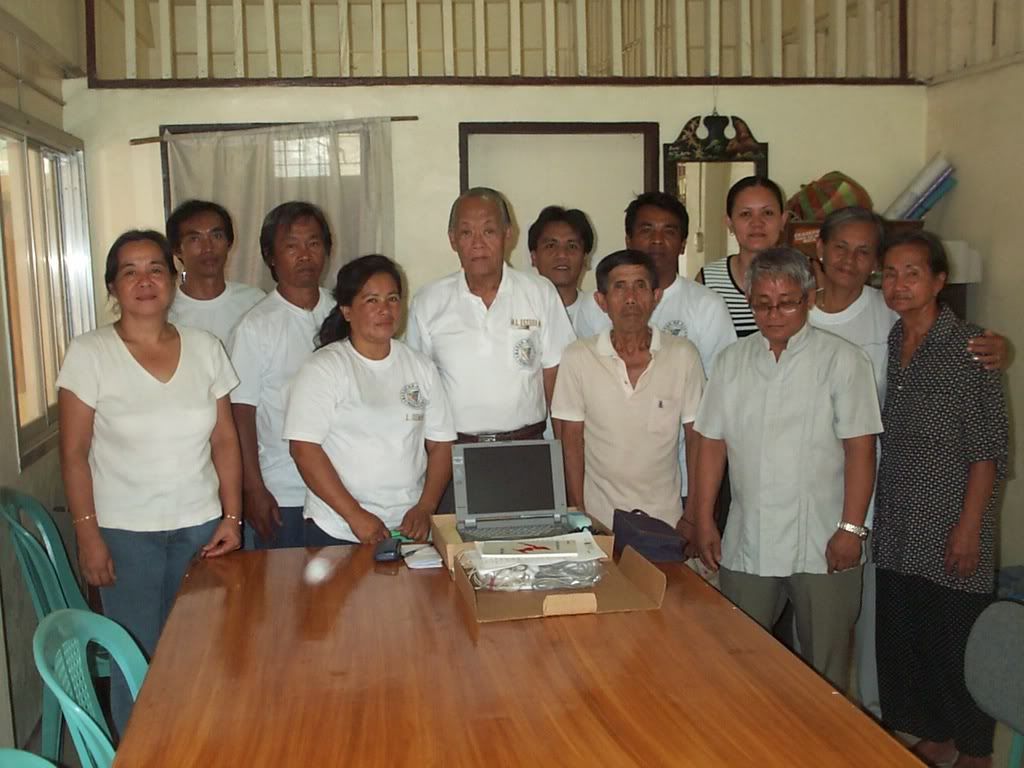 Education campaigns are necessary to every attempt at instituting direct democracy. Without some way of demonstrating people power to the masses, no one will understand the benefits of assembling in communities to the extent that would propel them to join. Lessons and methodology must focus strongly on destroying racial and ethnic tensions between diverse individuals and groups within the community. If a curriculum is set up, it must be geared toward building consensus and breaking down social barriers that have prevented many efforts toward direct democracy from flourishing. -Editor
Manuel Valdehuesa Street talk
Source: http://www.sunstar.com.ph/static/cag/2008/05/26/oped/editorial.html
REPUBLIC Act (RA) 7160 states that in addition to being the primary planning and implementing unit of government, the barangay is also "a forum wherein the collective views of the people may be expressed, crystallized and considered."
This makes governing the barangay similar to the direct democracy practiced in the districts of Switzerland (canton) and Israel (kibbutz), and indeed, ancient Athens.
Arroyo Watch: Sun.Star blog on President Arroyo
By assembling periodically, deliberating on issues affecting the community, taking responsibility for their neighborhoods, adopting resolutions, then taking collective action, people govern themselves.
In other words, they manage their community directly - deciding policy, program, and projects - the essence of autonomy, of self-governance. All these apply to every barangay.
The law makes it possible for the community not to rely solely upon higher-ups, not especially those who mistake public service as self-service, or those whose personal agendas offend public interest.
Good governance lies with the citizens themselves - including the task of guiding their leaders by providing them the direction, content, or standards of public service.
And the citizens may also remove their officials between election periods by direct, collective action if they lose confidence in them.
No one seems to appreciate its role or importance in making our republic strong and democratic.
This may be because when the Code was enacted in 1991, neither its authors in Congress nor its implementers in Malacañang and the Cabinet have bothered to launch a campaign to explain its provisions. They didn't know that introducing a new system requires information, education and communication?
Then again, perhaps they knew too well that to have explained the Code's provisions would have empowered and enfranchised the people.
Then it would have been goodbye to the good times, goodbye to dynastic rule, goodbye to election cheating, and, most horrid of all, goodbye to fabulous allowances, commissions, and graft!
Thus, instead of an IEC campaign, they just made half-hearted gestures to autonomy accompanied by pompous demagoguery.
And that is how and why the trapos remain the center of power in the community instead of the people.
Will barangaynons ever take charge? More on this as this column runs on.
Manny is a former UN executive, diplomat, DAP director, and vice chair of the Local Government Academy. He appears here Mondays, Wednesdays, Fridays. Email: valdeman_esq@yahoo.com
Thursday, May 15, 2008
Philippines: Cooperativism Promotes Participatory Democracy
Fortress of Genuine Coops  Cooperativism in the Philippines promotes participatory democracy, but is impeded by the capitalist environment in which it is attempting to flourish. - Editor
Tuesday, April 08, 2008
By Ben Sumog-oy
Issues and Views
THE City Government, under the auspices of City Mayor Pedro B. Acharon Jr., is hosting a national cooperative summit by October, this year. About 5,000 participants from every nook and cranny of the country are expected to attend this gigantic gathering of cooperative leaders.
As it appears, preparatory work pieces are now falling on their right places at the right time. In fact, on April 2, 2008, the signing of the Memorandum of Agreement (MOA) among stakeholders for this national undertaking was already undertaken at KCC Mall in General Santos City.
Indeed, this nationwide summit deserves our all-out support. For its part, this corner would contribute to the success of this summit by heightening public discourses on cooperativism, in its bid to crystallize cooperative-related issues. There has been no serious attempt in the past to subject the cooperative movement to judicious social assessment and this is probably the reason for its continuing bastardization.
Thus, as we all wait for the summit this coming October, we find it fit to engage in the continuing distillation of cooperative issues, hoping that we can help build strong fortress for the growth of genuine cooperatives.
So, let us begin this task by, first, clarifying the cooperative's theoretical framework.
Cooperatives, by nature, serve to counter-pose the prevailing capitalist system, regarded as the cause for the continuing destitution and disempowerment of the larger section of society. Their primary purpose is to effect society's immediate humanization and, finally, to facilitate its eventual transformation.
Towards this end, the paramount concern of cooperatives is to help usher the country's transition from its present liberal capitalist state to social democracy and to lead the nation during the precarious period of social reconstruction.
Thus, cooperatives are not regarded merely as business ventures, with a socialized system of ownership and democratic decision-making, but they are largely social movements with indispensable transformative agenda. And they should be so; lest, they give imprimatur to their own destitution and, in the end, write their own obituary.
Cooperatives wither away under a capitalist environment, like we have in this country. Cooperativism is a social concept that finds its nurturance under the system of social democracy, which is mainly characterized by mixed economy but with social ownership of the means of production as the dominant principle defining property relations.
Cooperativism, therefore, is an ideology that propagates participatory democracy as a system for political decision-making; stewardship as a system of property ownership; and collectivism as an operative culture. Thus, we cannot advocate cooperativism while, at the same time, defend, or being complacent against, capitalism as an economic system.
Cooperativism and capitalism, like oil and water, do not mix.
Social democracy is a fertile ground on which cooperatives take their roots, grow and mature. It is also on this ground where they take a leading role in the shaping of the nation's future.
Under social democracy, the role of corporate capital in the overall economy is sidelined and it is forced to conform to the stringent ethics of a humanist system, which considers social justice as an overarching goal.
As previously posited, cooperatives cannot subsist under a social system whereby the ownership of private property is lodged on the state which is controlled by monolithic political party.
In the Philippine setting, cooperatives are considered by extremist revolutionary forces as reformist projects that delay the success of the revolution.
Viewed at different perspective, under the present neo-liberal global order, cooperatives are destined to be bulldozed by tsunami-like fury of corporate capital.
Therefore, unless the cooperatives contribute to the overall struggle for system change, they cannot honesty justify their touted claim that they are working for "social justice and genuine development."
Let us summarize. Cooperatives travel along the center of the political spectrum; they are neither left nor right. They are but a happy combine of humanely efficacious elements from both the left and right. Therefore, they are neither capitalists nor communists.
Cooperatives, therefore, operate outside the realms of capitalism and communist-inspired socialism because they both share a common undesirable character, which the cooperative movement considers as an aberration -- crass materialism.
(Visit my blog: bensumogoy.wordpress.com)
Thursday, April 10, 2008
Phillipines: Akbayan Party and Participatory Democracy

The following gives a detailed description of the Akbayan party's platform in the Philippines which advocates participatory democracy. - Editor
http://www.akbayan.org/index.php?option=com_content&task=view&id=52&Itemid=74
Tuesday, 01 May 2007
A national party with a global outlook and agenda