 Venezuela's Bolivarian Process, Democracy, and Socialism: A View from the PSUV in Mérida
by Jeffery R. Webber
Source: http://mrzine.monthlyreview.org/webber060908.html
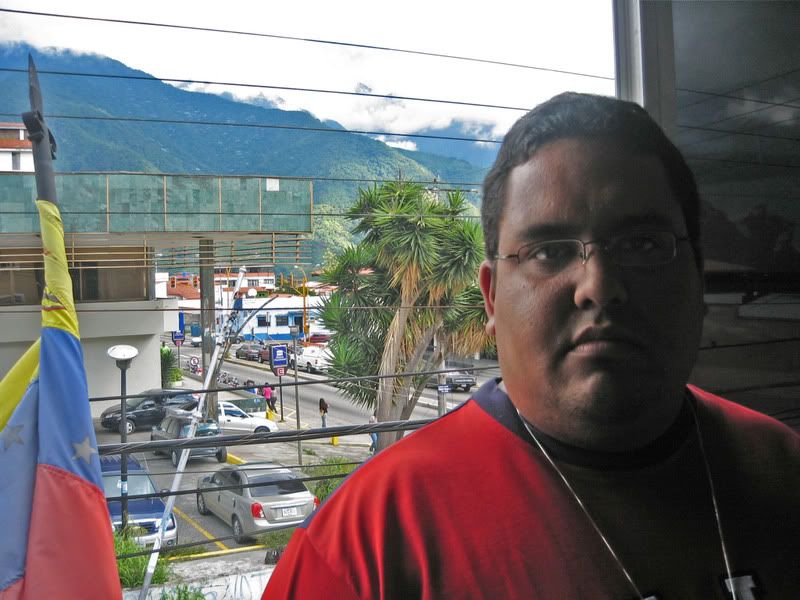
Canadian socialist Jeffery R. Webber interviewed Oscar González, Coordinator of Organization of Social Movements for Popular Power in the Mérida branch of the United Socialist Party of Venezuela (PSUV) – Mérida, Venezuela, September 5, 2008.
JRW: First, can we start off with your name and position in this organization?
OG: My name is Oscar González. I'm the Coordinator of Organization of Social Movements for Popular Power, within the United Socialist Party of Venezuela (PSUV). I am also the publicity representative, for one of the socialist battalions of the grassroots of the PSUV in Mérida.
JRW: How did you become a political activist in this organization?
OG: I responded to the call of our comandante Hugo Chávez Frías, in April 2006. We began to form, from the grassroots, a new party, the United Socialist Party of Venezuela. Various activists began to organize the people in communities, organized meetings, essentially founding the grassroots of the socialist party. This base can be found in the socialist battalions. Each poor neighbourhood (parroquia) has a number of them. The socialist battalions have on average 300 members who meet every week. They elect a spokesperson, a committee person for policy, a committee person for propaganda, for territorial defense. These are the grassroots, the basic cells, of the PSUV.
JRW: Can you describe the trajectory of the Bolivarian process in general terms since 1998? How has the process radicalized over the years?
OG: This process did not begin in 1998. It began with the Caracazo on February 27, 1989, when the people took to the streets in reaction to the policies imposed by the former President Carlos Andrés Pérez. And then there was barbarous military repression on the part of that government of the fourth republic.1
In this context, comandante Chávez founded the Movimiento Bolivariano 200, which made an oath [inaudible]. . . . Next, the coup of February 4, 1992 took place, led by Hugo Chávez Frías. He tried to take power, precisely to return it to the people.
All of this led to him going to jail. The coup failed. However, the people began to see hope. And this hope materialized in 1998 when Chávez won the elections, and arrived in the presidency.
After this moment, there was a radicalization of confrontation. Not on the part of the sectors that supported President Chávez, but rather on the part of wealthy sectors, people who have economic power, and who felt this diminishing in the sense that this government has tried to give power to the poor.2 But Chávez didn't cause this, it's a question of the class struggle. As you know, this is the eternal struggle that we have to confront.
JRW: What have been the most important successes of these years from your perspective?
OG: The most important successes of the revolutionary government of President Chávez have been the missions.3 The education missions have achieved almost 100 percent literacy in the national territory. They have achieved the inclusion of people who were totally excluded from middle and higher level education, with the Mission Río and the Mission Sucre. They have brought medicine to the barrios, the poor sectors, with the Mission Barrio Adentro. They have solved grave problems with the Mission Milagro, operations for people who couldn't see. They have implemented operation [inaudible], for the people living in the streets.
I think that the missions, with all that they lack and all their errors, have been the leading force of the Bolivarian government of Chávez.
JRW: At this conjuncture, what are the most important weaknesses that must be overcome?
OG: I think that the weaknesses are internal. We live in a capitalist society. We're capitalists. From when we're very young they plant a capitalist chip in our heads. For example, when you buy a sweater for your kid, you don't say, "take this sweater, it's for when you are cold," you say, "take this sweater, it's yours," and you plant the chip. So this makes it very difficult to introduce socialism overnight, or to assimilate ourselves to socialism. Proof of this was that we lost the reform [the referendum on reforming the Constitution in December 2007]. The reforms signified the start of socialism in Venezuelan territory.4
So, I think that the principal weakness is ideological. I think that we have to strengthen ourselves in this sense, so that the people really understand what socialism is and the benefits it brings.
That it doesn't mean that your kids will be taken away, or that your house will be taken away [in reference to the scare tactics of the right-wing opposition in Venezuela]. This government is the only government that has given property titles to those [impoverished] people who were living on municipal property. The idea that we are going to take away people's houses is very frustrating. It's all lies.
So, I think that the biggest weakness is ideological, and we have to overcome it.
JRW: From your perspective, what does Twenty-First Century Socialism mean, what does is mean for the PSUV?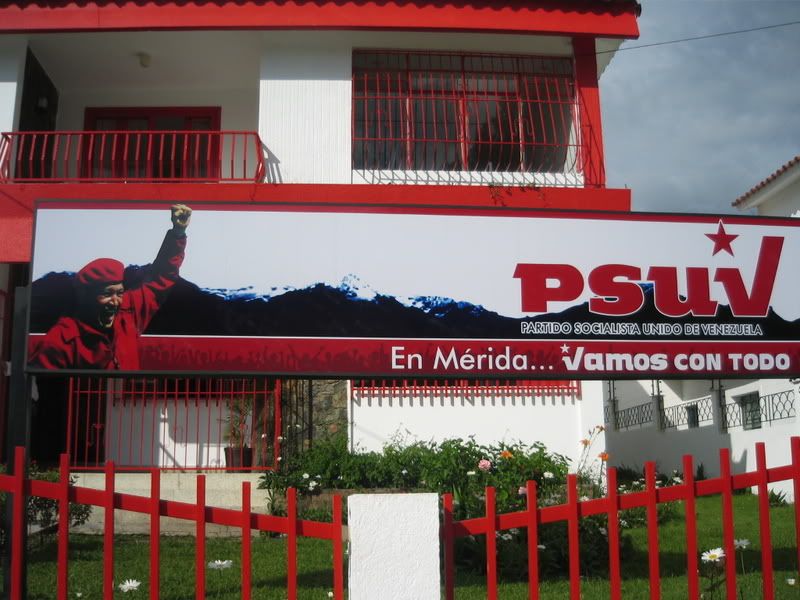 OG: Twenty-first century socialism is a socialism that we are building, and we have scarcely started constructing it. One hundred years could pass quickly, and we may still not have become socialists. But we are beginning to establish the foundations in the grassroots. Twenty-first century socialism is what we want, it's what all the Bolivarianos and socialists hope will occur in the future.
JRW: What is the relationship between democracy and this type of socialism? Does it mean the deepening of democracy, and, if so in what way?
OG: That's correct. The socialist democracy that we are trying to introduce is a participatory democracy, not a representative democracy. Capitalist democracy is distinctly representative. That is to say, you elect people to represent you. For us, no, we want to give power to the people, the communal councils, to the communes, so that the people really exercise power.5 Is there anything more democratic than that? It's impossible.
JRW: How has the formation of the new party, the PSUV, gone? Has it been a success? What are its strengths and its ongoing weaknesses?
OG: Obviously, it's been a success, because there is no other party that has been born with 5,700,000 members. Apart from this, the party has allowed for the popular sectors, the people of the grassroots, to participate in many of the structures that were still in the hands of people from the fourth republic.
All of the statutes of the party were discussed in assemblies of the socialist battalions. In this sense, the party has been a success.
Weaknesses? Of course, there are weaknesses. Principally, as I told you, they are ideological ones. But I think that the strengths of the PSUV are what will allow for the success of this revolution.
JRW: The last question. What kind of Venezuela are you struggling for? What type of Venezuela to you want to build?
OG: I want a Venezuela, we want a Venezuela, in which all the necessities of being a human being are covered. In which, as Bolívar said, there exists the highest level of happiness possible. That is to say, no one lacks housing, food, medical services, and satisfactory work.
And more than that, I want to go beyond that. We want a Venezuela where if you were born with a dream . . . if your dream was to be a painter, if your dream was to be a sculptor, if your dream was to be a musician, but you ended up deciding to try to become an engineer because you couldn't earn enough to live doing these other things. . . . We want a Venezuela where dreams become reality, where people live satisfactorily and satisfied, according to their dreams.
____________________________________________________
1 The Caracazo, named for the events in the capital city of Caracas in February 1989, actually involved protests and rioting against the introduction of neoliberalism across the entire country. Andrés Pérez had just been elected on an anti-neoliberal platform but was now attempting to ram an orthodox restructuring program down the throats of Venezuelans. The president decided to make an example of the protesters, and the urban poor more generally, giving the green light for military and police repression for days, leaving a large number of dead. Estimates range from 300 to 3,000 dead. The "fourth republic" is the pejorative term that Chavistas use to describe the post-1958 era of elitist "pacted democracy," or the arranged sharing of power between the ideologically indistinguishable AD and COPEI parties.
2 Most important in terms of failed counter-revolutionary measures carried out by the far-right were the April 2002 coup attempt, backed by the United States, the oil lockout of 2002-2003, and the 2004 presidential recall referendum.
3 Beginning in 2003, the Chávez administration began its mission programs, which are special programs principally in health and education that are effectively parallel structures running alongside the old ministerial and legal infrastructure of the health and education system.
4 The reform referendum included sixty-nine reforms to the 1999 Constitution that were proposed by the President and the National Assembly. The reforms were defeated in a vote on December 2, 2007 by less than 2 percent.
5 At the outset of 2007 roughly 20,000 communal councils had been formed, each consisting of between 200 and 400 families, and operating essentially as neighbourhood councils, with a budget provided by the government for infrastructural and social programs. See Steve Ellner, Rethinking Venezuelan Politics: Class, Conflict, and the Chávez Phenomenon, Boulder: Lynne Rienner, 2008, pp 127-128.
Friday, September 19, 2008
VENEZUELA: INTERVIEW - Participatory Democracy and the PSUV

Friday, May 30, 2008
Venezuela: Moves are Taken to Maintain Grassroots Democracy Within the P.S.U.V.
 While these political battles permeate the creation of the PSUV, we must consider who is controlling the Bolivarian Revolution and who should be controlling the Bolivarian Revolution. People have differing opinions as to whether a political party is even a valid mechanism for uniting social movements to elected leaders, and it is important to note that is what these disputes are about: whether or not elected officials are truly representing the will of their popular base. When so much of the focus is on elections and how they will be run fairly or on the selection of candidates, the people become frustrated by the frequent disconnects between the motivations of bureaucratic elected officials and/or candidates and those of the people and the movement. While it is important to weed out corruption and bureaucracy, instead of focusing on the downfalls and about-faces of elected officials the party could be working more on education and empowerment at the grassroots level so that communities come to understand the importance of defending the revolution, and have the skills and organization to continue toward participatory democracy for all with people power at it's core. -Editor
Controversy Erupts Over Nominations for PSUV Candidacies in Venezuela
May 26th 2008, by Kiraz Janicke - Venezuelanalysis.com
Source: http://www.venezuelanalysis.com/news/3494
Caracas, May 26, 2008, (venezuelanalysis.com) – A controversy surrounding the exclusion of the popular Mayor of Torres Municipality, Julio Chávez, from the list of pre-candidate nominations for governor of Lara within the United Socialist Party of Venezuela’s (PSUV) internal elections was resolved yesterday with Mayor Chávez’s nomination being reincorporated following the direct intervention of President Hugo Chávez.
As part of a nominations process open to all PSUV members, Julio Chávez (no relation to President Chávez), registered his pre-candidacy for governor of Lara on May 14. Days later, three high officials from the PSUV national executive met with Chávez and asked him to renounce his candidacy in favor of Henri Falcón, (currently Mayor of Barquisimeto), instead, they suggested, Chávez should run again for mayor of Torres Municipality.
Despite Mayor Chávez’s rejection of the proposition, the subsequent list of pre-candidates released to the media by the PSUV national executive on May 23 showed that he had been excluded from the list of pre-candidates for governor of Lara, but included in the list of pre-candidates for Torres Municipality.
On the same day Falcón also announced to the media that Chávez had withdrawn his aspirations for governor.
However, in a signed declaration, evocative of President Chávez’s declaration during the short-lived April 2002 military coup in which he confirmed he had not resigned as president, Mayor Chávez confirmed that he had not withdrawn his nomination.
The exclusion of Chávez from the list of pre-candidates provoked outrage amongst the rank and file PSUV members in Lara who saw it as a bureaucratic attempt by the national executive to override internal democracy within the party and impose a candidate from above.
Hundreds of PSUV members mobilized spontaneously and surrounded the party’s regional headquarters last Thursday and Friday chanting the infamous slogan celebrating the defeat of the coup; “Uh ah, Chávez no se va! Uh ah Chávez no se va!” (Chávez is not going), however, this time not in reference to President Hugo Chávez, but to Mayor Julio Chávez.
The PSUV national executive was forced to back down and on Sunday met with Mayor Chávez in the local government offices in Torres to rectify the situation and reincorporate him back onto the list of pre-candidates for governor of Lara. President Chávez, who has repeatedly called for candidates to be selected democratically by the members of the party, telephoned the mayor directly to assure him that the situation had been corrected.
Underlying the dispute is not only the question of candidates, but of two competing and completely different political projects.
“With Henri Falcón we go towards the right wing… The national leadership doesn’t know what’s going on in Lara. They are guided by opinion polls,” “It is necessary to respect the will of the grassroots,” members of the PSUV regional leadership commented to Aporrea on May 25.
Earlier this month PSUV vice-president Alberto Müller Rojas announced that Falcón had been expelled from the PSUV for allegedly violating party regulations and launching himself as a candidate for governor without having been democratically chosen by the members.
Falcón then said he would continue his campaign for governor of Lara through the For Social Democracy Party (PODEMOS), once part of the “Chavista” alliance, now in the opposition. However, before that happened, Muller Rojas announced that it was an “error” and Falcón had not actually been expelled from the party.
According to an April 30 article on the website of the newspaper Panorama, Falcón has support among both government and opposition sectors, with various opinion polls indicating he has a good chance of winning the governorship in the November regional elections.
However, supporters of Mayor Chávez argue that Falcón is the “visible head” of the endogenous rightwing of the Bolivarian revolution in Lara and contend that he has implemented a neo-liberal program during his time as Mayor of Barquisimeto.
On the other hand, while Mayor Chávez is loathed by opposition sectors, particularly local business elites and the private media, he is extremely popular amongst the grassroots and the poor for being the only mayor in Venezuela to have transferred control of the majority of the municipal budget directly to organized communities and for implementing a process of radical transformation and democratization of the entire governance system of his municipality.
His municipality served as a testing ground for the implementation of the direct democratic communal councils that were launched nation-wide in late 2005.
Controversy also continues to grow surrounding the pre-candidacy of the current governor of Bolivar, Francisco Rangel Gómez, who is running for a second term.
On May 21 Hector Herrera Jimenez, a pre-candidate for governor, and PSUV members and lawyers Atilio Tapia and Francisco Sierra accused Rangel Gómez of corruption and of using public money for his own political campaign with in the PSUV internal elections.
Tapia also argued that an investigation should be opened of Rangel Gómez, relating to an incident on March 14 when the National Guard, acting under orders from the governor, violently broke up a protest of striking workers from the SIDOR steel plant.
This was followed by a call from José Gregorio Beria, a PSUV member and pre-candidate for Mayor of Caroní, for Rangel Gómez to withdraw his nomination, saying the party is headed for an “electoral debacle” in the state of Bolivar if Rangel Gómez is chosen as the candidate.
Today National Assembly Deputy Adel El Sabayar, also a pre-candidate for governor of Bolivar, denounced that Rangel Gómez is utilizing public resources in a “gross and abusive” manner and confirmed that he lodged a formal complaint to the regional and national leadership of the PSUV over the multiple irregularities that are alleged to have occurred.
According to El Sabayar, the conditions exist for the immediate annulment of Rangel Gómez’s candidacy due to his violation of party regulations.
In particular, El Sabayar criticized as a “show” an event organized on May 18 for the presentation of pre-candidates, from which many pre-candidates were excluded and governorship employees were obliged to wear t-shirts saying “Rangel for Governor.”
El Sabayar also denounced that PSUV members who are employees of the governorship in the state of Bolivar are being “intimidated” to vote for Rangel Gómez on June 1.
“In the different institutions of the governorship of the state it has been said to the workers that it is possible to know who they voted for in the internal party elections,” he said.
However, the National Assembly Deputy assured, voting in the PSUV internal elections is by direct secret ballot and members should not be intimidated.
In a separate press conference today PSUV members Elio Sayago, Yaritza Rodríguez, Francisco Sierra, and Gervasio Coronado assured that they have documentary proof that Rangel Gómez has violated party regulations including the use of the figure of President Chavez to influence the opinion of voters, as well as using public employees and public funds to promote his candidacy.
The PSUV militants will hand over the document and are demanding the immediate disqualification of Rangel Gómez in the party’s internal elections.
Sayago, a worker from the ALCASA aluminum plant and pre-candidate for Mayor of Caroní, said the demand for Rangel Gómez’s disqualification has been endorsed by a “good part” of the workers in basic industry and especially by the workers at the SIDOR steel plant.
According to Yaritza Rodríguez, Rangel Gómez does not guarantee the development of the revolutionary process in the state of Bolivar. “He has worked in function of his own interests,” she said.
Monday, May 5, 2008
Como Construir un PSUV Democratico
 Ya que el PSUV ha sido reconocido como el partido unido de la Revolución Bolivariana en Venezuela, los lideres del partido siguen buscando la mejor manera de hacer que sea un partido completamente democratico y participativo. Así que todos estan trabajando hacia un proceso organico y unificador del pueblo en la formación del PSUV, y luchando para que el PSUV sea un mecanismo que podrá reformar la politica de Venezuela y eliminar la burocracia que amenaza el proceso revoluciónario. Esta unificación organica de los diversos elementos de la revolución que el PSUV puede proveer creará una frente unida en contra a la burocracia y la oposición. Los autores de este articulo son de esa gente dedicada a la revolucion, la democracia participativa, y un PSUV que permita la participacion popular y la unificacion de gente diversa. Apoyamos todos los esfuerzos del pueblo Venezolano para aumentar la participación de todos en la Revolucion Bolivariana, y el crecimiento del poder popular. - Editor
A modo de evaluación del proceso de construcción y del nombramiento de una Comisión Disciplinaria...
¿Cómo construir el PSUV, si queremos que sea el partido más democrático?
Source: http://mareasocialista.com/psuv-65.html
Autor: Gonzalo Gomez
07 de Enero de 2008
Lo que nos ha dicho Chávez al proponer las líneas fundacionales del partido:
En su discurso de Discurso de la Unidad, el 15 de diciembre de 2006, cuando llamó a conformar el PSUV, y en el Discurso del Inicio de la Construcción del PSUV (24 de marzo de 2007), el presidente Chávez emitió algunas ideas sobre el régimen interno del partido y sobre su relación con el pueblo, las cuales aportaron elementos referenciales básicos para su construcción. Entre otros comentarios, el presidente dijo lo siguiente:
"Un partido unido es lo que quiere la revolución.
Propongo que se incorporen a él todas las corrientes de la izquierda venezolana".
Hablando del modelo bolchevique de partido, reconoció el gran éxito que tuvo en la revolución de 1917 y en el nacimiento de la Unión Soviética, pero señaló que "...ese partido sufrió una desviación, la desviación stalinista (...) se desnaturalizó y terminó siendo un partido antidemocrático". Dijo que a consecuencia de esto, la consigna "¡Todo el Poder a los Soviets!" (Consejos de Obreros, Campesinos y Soldados), se convirtió en "¡Todo el Poder para el partido!". El presidente relacionó lo acontecido con
el partido con la conversión la Unión Soviética en "régimen elitesco que no pudo construir el socialismo".
Al referirse al Socialismo del Siglo XXI afirmó que "nuestro proyecto es esencialmente democrático. Hablamos de democracia popular, democracia participativa, democracia protagónica". De la misma manera, refiriéndose al Partido Socialista Unido, dijo que "deberá ser el más democrático de los partidos de la historia venezolana" y que "dentro de él se discutirá, se abrirá el compás".
Sobre la elección de los líderes planteó que "en este nuevo partido se elegirá por la base a los líderes. Eso permitirá que aparezcan los verdaderos liderazgos. Ya basta del dedito, del dedo, y casi siempre el dedo mío... Que sea el pueblo el que tome las decisiones, como está escrito aquí en esta Constitución, desde hace ya siete años, y no lo hemos cumplido. Ya llegó la hora de hacerlo".
Otra opinión que vertió el presidente Chávez es que "un partido nuevo necesita nuevos rostros", porque si seguían "las mismas caras de siempre", las mismas direcciones de los viejos partidos, "¡eso sería un engaño!".
Respecto a la libertad de debate, el 24 de marzo en el Poliedro dijo: "Aquí hay plena libertad de debate y esa debe ser una de las características más profundas del nuevo partido, el debate, desde las bases; no un debate circunscrito a una élite, a una cúpula, a un cogollo. Consulta, participación, protagonismo, debate. Eso sí, cuando se decida, entonces, viene la disciplina. Se decidió esto, bueno yo tengo una visión distinta; pero es la decisión, por ahí tenemos que irnos, porque se trata de una revolución". Chávez plantea que "esa unidad no debe ser burocrática; debe ser orgánica, real, profunda, debe profundizar la democracia revolucionaria". En su discurso, el presidente insiste en que la única forma de ser líder del partido, en cualquier nivel, es si se viene elegido por la base; incluso lo aplica para él mismo: "si no, no debo estar en ningún cargo de dirección".
¿Cómo va la democracia interna en la construcción del PSUV? Algunos comentarios y propuestas Indudablemente, en el seno de los batallones, aunque pueda haber excepciones, y a juzgar por la propia experiencia y por los comentarios de otros aspirantes, se respira un ambiente de libertad de debate. Los aspirantes a militantes están participando y decidiendo, por la base, sobre las discusiones y actividades de los batallones, aunque lógicamente se reciben orientaciones de la Comisión Presidencial Propulsora, que no constituyen en modo alguno una imposición. Lo mismo está ocurriendo respecto a la discusión de la Reforma Constitucional, y esto es, por supuesto, bastante sano.
Tampoco parecen estar ocurriendo, como regla general, aunque puedan existir ciertos casos, interferencias burocráticas de la vieja dirigencia partidista o de funcionarios de los aparatos institucionales del Estado. En algunos batallones donde algo así ha sucedido, por lo común ha sido neutralizado y extirpado por la base que no se ha dejado manipular.
Sin embargo, todavía no se han aceitado mecanismos bi-direccionales suficientemente efectivos para la comunicación entre la base y los miembros de las comisiones presidenciales del PSUV, que vienen impartiendo orientaciones y guiando el proceso de construcción, la conformación de las agendas de discusión, la elaboración y distribución de materiales. De manera que los aspirantes y batallones con aportaciones, propuestas, inquietudes, observaciones o disensos, no sabemos muy bien cuáles son las maneras de que todo eso sea tomado en cuenta. Ahora con la elección de los voceros y comisionados de los batallones, para la constitución de las Circunscripciones Socialistas, la elección de delegados al Congreso y la participación en el mismo, esto se debería canalizar mucho mejor.
Las Circunscripciones Socialistas, como expresión de los batallones que les dan origen, deberían discutir la manera de conducir el período precongreso y el congreso para garantizar que todos tengamos derecho a presentar y difundir nuestras opiniones, posiciones y propuestas, así como las criticas y los desacuerdos cuando así sea el caso, no sólo verbalmente sino también mediante documentos que circulen en el PSUV, además de las garantías para defenderlas en todos los ámbitos del partido en formación. De manera que las Comisiones Presidenciales deberían retroalimentarse y abrir más la participación en este período, ya que todos tenemos ideas sobre cómo ir estructurando el partido.
Esto también es válido para el caso de la Comisión de Disciplina que fue nombrada por el presidente Chávez a raíz de declaraciones y actuaciones polémicas de Ameliach, de varios diputados y de algunos propulsores nacionales. Es algo que se ha discutido muy poco en los batallones, pero que no debe suceder al margen de la base y además puede tener un impacto significativo sobre el futuro funcionamiento del PSUV, sobre el régimen democrático con que se le pretende dotar.
Sin tener ningún punto de concordancia con Ameliach y aún pensando en la falta de pertinencia de sus declaraciones, es legítimo preguntarse: ¿Con qué criterios se evalúa o se imponen sanciones, cuando no hay estatutos ni un marco político formal, que será tarea del Congreso Fundacional? ¿A quién corresponde la potestad de conformar esa comisión en un partido que aspira a una democracia participativa y protagónica de su base? ¿Quién es elegible para integrar la comisión con equilibrio, probidad e imparcialidad? ¿Qué papel hemos jugado el resto de los aspirantes y los batallones en la toma de esas decisiones? ¿Por qué no se han hecho reparos a otros dirigentes cuyos nombres se han visto involucrados, públicamente o en preocupantes rumores, en casos de corrupción, negocios contrarios a los preceptos socialistas y violaciones de derechos humanos? Todo esto debe ser revisado a la luz del concepto de "democracia y ética revolucionaria".
En torno a la discusión de la Reforma es muy importante que el llamado a su defensa no pase por encima de la reflexión crítica y la conveniencia de estimular los aportes y observaciones de los aspirantes. Las declaraciones y señalamientos de algunos líderes y parlamentarios chavistas crean cierta atmosfera hostil hacia los cuestionamientos aunque provengan del campo revolucionario. En el PSUV hay revolucionarios, hay gente del pueblo, hay dirigentes del movimiento sindical, hay líderes campesinos, hay líderes de comités populares y de consejos comunales. Debe haber plena libertad para que aporten todas sus ideas dentro del PSUV, y en la discusión pública, con el objeto de al presidente le llegue el resultado de la participación democrática y protagónica de su partido, que no se limita a apoyar, sino que también puede enriquecer, fortalecer o incluso proponer modificaciones a la propuesta.
Monday, April 28, 2008
Symposium Reflection: Participatory Democracy in Venezuela
 One editor of La Esquina Caliente attended the Venezuela Solidarity Symposium in Washington DC at Howard University last week. Inspired (by community councils and democratic mayors) and outraged (by US intervention), she wanted to post the following article to give our readers a general overview of the information shared at the conference. The event kept a very positive outlook regarding the success of participatory democracy in Venezuela. Each speaker emphasized the great gains that the revolution has made toward giving the people more power to control their economic and social realities but also the fragility of the movement. Much more consolidation and organization will have to happen with Venezuelans who are committed to securing their popular power, but democracy within the PSUV will also have to be considered when examining the processes. While consejos comunales represent an institutionalized relinquishment of state power to the communities, the PSUV has much responsibility in shaping popular participation within the government. The PSUV will play a large role in continuing the revolution when Chavez leaves office and must work to defend the Bolivarian Revolution from imperialist attacks while simultaneously building itself in the most participatory democratic form. For more on this specific topic, please see the Spanish-language article by Gonzalo Gomez who spoke at the recent conference: http://mareasocialista.com/psuv-65.html There is much hope for success, but many obstacles were also discussed at the conference. Read the article below for a great summary of the symposium and look for more posts regarding the exemplary status of participatory democracy in Venezuela. -Editor
Venezuela Solidarity Symposium
By Marc Becker
Source: http://www.politicalaffairs.net/article/articleview/6781/1/330/
Leading academic scholars and grassroots activists gathered at historic Howard University in Washington, DC, from April 18-20 for the national symposium “What’s Up With Venezuela: Participatory Democracy or Democracy as Usual?” The meeting provided an opportunity for 200 solidarity activists from across the United States to study the revolutionary changes sweeping through Venezuela.
In 1998, Venezuelans elected Hugo Chavez as a left-populist president to lead the country. Since then, he has worked toward regional integration and against US domination of Latin America. This has placed Venezuela on a collision course with the US. “Chavez is threatening,” political scientist Steve Ellner argued, “because he shows that there are viable alternatives to neoliberalism.” In a region that seems to produce its share of bad news, Venezuela is an example of hopeful and positive change.
A principal theme that ran throughout the symposium was that the Bolivarian Revolution (so named after Venezuela’s independence leader Simon Bolivar) is not a movement built around one person. James Early, Director of Cultural Heritage Policy at the Center for Folklife and Cultural Heritage at the Smithsonian Institution, said “Chavez is not the revolution, but a conduit for it.” Supreme Court justice Fernando Vegas explained institutional divisions of power in Venezuela to make his point that Chavez is not a dictator and does not control everything in the country.
Instead of emphasizing Chavez’s role, most of the presenters stressed the importance of constructing a participatory and protagonistic democracy to build new relations between the government and popular organizations. “Democracy is not just formal institutions,” labor leader Gonzalo Gomez with the National Union of Workers (UNT) said, “but also the mobilization of people.” Venezuela Solidarity Network organizer James Jordan argued that participatory democracy begins with organizing at the grassroots level.
While the presenters defended Chavez, they did not give him their uncritical and unqualified support. Gomez argued that much of the positive progress that has been made in Venezuela is not due to Chavez’s leadership, but from dedicated activists pushing him in a leftward direction.
Jorge Guerrero, Venezuelan Consul in New Orleans, explained the growing role of communal councils that are leading toward self government. In the future, Guerrero predicated, they would not need mayors because people will solve their own problems. Julio Chavez, the mayor of Torres, Venezuela, said that he was one of those working to realize that goal. “How can they accuse of us being authoritarian and centralist,” Chavez asked, “when we are giving power to the people?”
The communal councils are only one example of the many fundamental transformations in Venezuela. Antonio Gonzalez from the Southwest Voter Registration Education Project (SVREP) noted that Venezuela’s wedding of multi-party, participatory elections with a socialistic redistributive process is rather unique. Not only has this led to success for the Bolivarian Revolution, but hopefully it will also make it much more difficult for the United States to justify an invasion of the country.
Although there have been significant advances, there are still numerous bureaucrats from previous governments who are still in positions of power. Perhaps more dangerous are political opportunists who paint themselves as Chavistas (supporters of President Hugo Chavez), but are not ideologically committed to the Bolivarian Revolution. Increasingly, however, career diplomats and government bureaucrats are being replaced by movement activists who are committed to pushing the country toward socialism.
In addition, institutional interests can also place a break on revolutionary change. The Venezuelan Embassy’s Labor Attaché Marcos García emphasized that leftward pressure comes from people (workers) rather than institutions (labor unions) that too often become bogged down in bureaucratic concerns. Social movements are important so that the government does not sell out a revolutionary and socialist project. Gonzalo Gomez called these social movements the “motor of the revolution.”
Clara Herrera from Venezuela’s Central University observed that Chavez is just the tip of the iceberg of changes sweeping through the country as people become increasingly energized through grassroots popular movements. Omar Sierra and Jorge Guerrero from the Boston and New Orleans consulates discussed the roles of Indigenous peoples and Afro-descendants in the Bolivarian Revolution. Sierra said that changes in Venezuela are not the will of only one man, but the result of 500 years of Indigenous struggle.
Guerrero presented Chavez as a tool that embodies the hopes and aspirations of historically oppressed and excluded peoples to build a new protagonistic and participatory system. Imperialists are opposed to the Venezuelan government because it has allied with the downtrodden. This extends to international policies, as Venezuela has significantly expanded its diplomatic relations with Africa and the Caribbean. For example, students from Mali are studying textile manufacturing in Venezuela so that they can help their country gain value from cotton production rather than exporting the raw materials. These are not vertical relationships of domination, but horizontal ones built around ideas of solidarity.
Economists Adina Mercedes Bastidas and Mark Weisbrot presented data that illustrates dramatic recent economic growth in Venezuela. Chavez’s economic priorities have led to notable increases in health care, education, and employment. Weisbrot responded to an essay that Francisco Rodríguez published in Foreign Affairs that maintained that the poor have been hurt by Chavez’s policies. In a detailed analysis on the Center for Economic and Policy Research website (http://www.cepr.net/), Weisbrot shows how Rodríguez cherry-picked his data to reach misleading conclusions. In fact, poverty has dropped in half. Some of the current economic problems, such as a high inflation rate, are the result of long-term structural problems that cannot be turned around overnight.
Miguel Rodríguez, Vice-Minister for the Environment, discussed the challenges of attempting to improve standards of living while still preserving the environment. Venezuela is energy rich, and seeks to develop a sustainable economy. Although as a petroleum exporter gasoline is cheap, the government has emphasized public transit and produces most of its electricity from hydroelectric dams. Furthermore, the government emphasizes conservation as a way to meet peoples’ needs. “Socialism of the twenty-first century has to be ecological,” Rodríguez said, “and it also has to be materially possible.”
The US government and mainstream media, both in Venezuela and internationally, have engaged in a relentless disinformation campaign against the Bolivarian Revolution. Steve Ellner said that the hostility has little to do with Chavez’s style, but rather his economic and social policies. In Venezuela, the intransigent opposition to Chavez is based on conservative support for neoliberal policies that advocate shifting resources from the poor and marginalized and back towards the wealthy and privileged elite classes.
During the 1980s, Venezuelan governments engaged in blatant censorship of the media. Today, that does not happen, and there are more press freedoms than at any other point in the country’s history. The press remains overwhelmingly in private hands, owned by a wealthy elite deeply antagonistic to Chavez’s socialist project.
Mark Weisbrot gave Francisco Rodríguez’s essay in Foreign Affairs as one example of the constant barrage of misinformation. Without a popular media, Gonzalo Gomez said, a participatory and protagonistic democracy will not be possible. This does not happen automatically, but we need to get people accustomed to using these tools. The Venezuelan government has facilitated a move in this direction by creating spaces for community radio. “If the press is less anti-Chavez,” Olivia Burlingame Goumbri from the Venezuela Information Office contended, “it is because of growing popular support for Chavez.”
Journalist and sociologist Greg Wilpert explained how Venezuela has one of the most safe and secure voting systems in the world. Perceptions of fraud or a politicized electoral council are not based in fact. Wilpert positioned himself as a free speech advocate, and argued that the media is too important to be held in private hands that respond to corporate interests. Rather, public accountability is important to democratize the means of communication.
Attorney Eva Golinger explained how the attacks on Venezuela increased dramatically in 2005 when Condoleezza Rice was elevated to Secretary of State in the United States. The United States creates and funds a right-wing opposition in Venezuela through institutions such as the National Endowment for Democracy.
Venezuelan lawyer José Pertierrra pointed to the hypocrisy in US attempts to classify Venezuela as a state sponsor of terrorism. While there is no evidence that Venezuela sponsors or engages in terrorism, the US military is in the midst of its own torture scandals at Abu Ghraib and Guantanamo. More blatant is the case of Luis Posada Carrilles who blew up a Cuban airliner with a toothpaste bomb in 1976 as it left Venezuela. Not only was Posada Carrilles a CIA operative, he also currently lives freely in the US. Refusals to extradite him to Venezuela means that the US supports terrorism.
The symposium ended with a Lobby Day, with participants taking what they learned to Congressional Representatives on Capitol Hill.
Marc Becker is a Latin American historian and a member of Community Action on Latin America (CALA), in Madison, Wisconsin. Photos from the symposium are available at http://picasaweb.google.com/marcbecker2/VenezuelaSymposium.
Thursday, January 31, 2008
P.S.U.V. Seen as a Unifying Force Behind the Institution of Participatory Democracy in Venezuela
 The formation of a unified socialist party in Venezuela has a new urgency after the defeat on Dec. 2nd 2007 of the proposed constitutional reforms , which sought to fast track the transition to socialism and expand participatory democracy in the country. The P.S.U.V., as the unified party is called, is seen as a key element in bringing together the grassroots base of the revolution, which has become disenchanted with the corruption and bureaucracy within the ranks of the government, and the leadership, which is seeking to institutionalize participatory democracy in order to make it lasting and permanent.The P.S.U.V. can potentially provide the common thread between these two extremes that will unify them in the effort to stamp out the corruption that threatens the revolution from within, and to push forward the effort to transform the popular movement from one of informal grass roots activism to a new frimly established political order, one that places power permanently in the hands of the people, within a structure that will resist future attempts to return that power to its traditional limits within the oligarchy. The following insightful article explores in great detail the pitfalls in this process of unification. - Editor
By Federico Fuentes, Caracas25 January 2008
On January 12, Venezuelan President Hugo Chavez opened the founding congress of the provisionally-named United Socialist Party of Venezuela (PSUV). Chavez argued it was necessary to go on the offensive with the PSUV “as the spearhead and vanguard” of the revolution his government is leading. “We have arrived here to make a real revolution or die trying.”