Venezuelan Direct Democracy – The case of the Consejos Comunales
November 21st 2008, by Michael Albert and Adam Gill - ZNet
Source: http://www.venezuelanalysis.com/analysis/3967
In 2004, Venezuelan President Hugo Chavez created a movement named the consejos comunales (communal councils) aimed at creating more responsive local governance by handing local budgetary and legislative power to the councils. This movement was seen by Chavez as one of the most important of the five motors of the ‘Bolivarian Revolution' in that they should influence policy from the grassroots upwards. Great interest in the councils was evident between 2004 and 2007 in that thousands formed quickly and $5 Billion was given to them during this period. Communal banks are a pre-requisite to receiving funds from the government so as to avoid clientalistic relationships of dependency.
Local councils have the power to vote on issues directly affecting their community and have used this to make significant changes. Major improvements have included building social housing and repairing roads. The local councils are formed with 200-400 families with members aged 15 and above and have an executive council and representatives of groups within the community.
I asked Michael Albert if he might be able to offer his opinion on this movement in Venezuela.
--------------------------------------------------------------------------------
What do you feel the role of the Communal Councils is strategically and politically?
Well, I believe they are partly intended, in the present, to push forward the whole revolutionary process by increasing current participation, raising consciousness, etc.
But I also believe that for a great many folks in Venezuela, both inside and outside the government, the councils are the evolving infrastructure of a new polity. The idea is that people should govern their own lives, and in that context local councils are the proposed vehicle for doing it. As such, they are intended to become an alternative to rather than just being an adjunct to local governments of mayors and governors and the like.
Would you say the councils have created social change or more that their energies are being pulled in other directions?
I don't feel very equipped to answer this question, and I am not entirely sure, in any case, what you mean by "other directions." I can judge only from a very great difference and based on talks with only a limited number of people what the councils are up to.
My impression, and it is tentative, is that the councils are a vast and evolving experiment and project, by no means final in form and by no means fully up to speed, but coming along, though many problems still exist. First, for example, there is a population which - like our population in the U.S - has almost zero experience prior to this experiment with serious democracy much less participatory self management. So the councils and their members are learning in practice, and for many people that has ups and downs. But second, and less benign, there are obstacles as well having to do not only with past habits or current doubts, but also with real opposition, as in local governing and corporate elites not wanting this experiment to work.
Venezuela seems to me to be uniquely seeking a gigantic revolution in structures and relations - not just economically but also politically, socially, culturally - all non violently and even without much confrontation, none provoked by the agents of change. That is historically ambitious, to say the least.
So in one corner you have corporate media continuing, and corporate ownership in many realms, and governors and mayors and whatnot from the prior history of the country, all also still in place, nearly all still hoping to resurrect that prior history. In the other corner you have the Bolivarian activists, and Chavez, and a large proportion of the non elite population, instead trying to escape that past into something fundamentally new.
Venezuala is, in other words, a daily economic, political, social, and cultural cauldron of experiment and opposition - and thus a site of intense struggle. Or that is how I see Venezuela, at any rate, and in that context the local communal councils are partly a tool of the struggle but are also partly seeds of a new future being built in the present.
Should Communal Councils be free of political party influence?
This depends, I think, on what you mean by party influence. So, for example, it wouldn't make sense to say there should be no party influence. Imagine a council with people in it, of course. Some people are in one party, some people are in another party. The parties they are in influence those people's desires (and vice versa). The people then bring their desires to the councils, so through their members the parties influence the councils as well. That much is fine, in my view. It would make no sense to say that shouldn't occur.
So, for example, there are councils in communities that are very Bolivarian, and they have views and aims quite like those of the Bolivarian revolution. There are other councils in communities that are opposed to Bolivarian projects, and those councils reflect those opposition views. The parties are in part carriers of the views and the people form parties, in turn, influence the councils.
On the other hand, I think you might mean should parties as entities be able to themselves direct or otherwise impact councils, other than by the fact of their members indirectly doing so. Here I think the answer is no, they should not be able to do that.
Your question is a bit like asking, in the U.S., should local government (just imagine, for the sake of the discussion, that it was actually grassroots and participatory) be in any way at all subject to instruction or control by political parties (other than being impacted by the local members of the community who happen to be in parties)? Well, of course it shouldn't, and ditto for Venezuela. A party should impact councils simply by impacting the population that composes the councils, but not by some sort of collective or structural authority.
Do you think that party influence and political movements still operate as clients of central governments?
I am not sure I understand this question. In Venezuela, at present, the Bolivarian revolution is very much a manifestation of the ideas and will of President Chavez. We might prefer that the movement had bubbled up, instead, from the population, and that Chavez was merely one among many carriers of their intentions - but that isn't the case. In fact, Chavez is constantly trying to impact what the population thinks and wants, not just to hear from it. The government is not only administering Venezuela, as it is seeking to use state power as a tool to build social involvement and activism. It is very unusual, of course.
So in that context, the recently created revolutionary party Chavez is in is certainly affected greatly by him, as are the social movements whose members typically consider him a repository of valuable ideas and plans, as is the government. Again, this is arguably not an optimal picture, and it is certainly an unusual one - a president seeking to build movements that will replace authorities, including the old government structures, including himself - at least that's the current agenda - throughout the country - but that is what is happening, or so it seems to me, from my admittedly limited contact.
Can the Communal Councils in your opinion, become the only form of local government in Venezuela? What obstacles do you perceive to be happening now and possibly in the future?
I certainly think that is possible, and that that is the goal, not just conceivable, at least in many people's minds, including in the relevant political ministries. I sat in offices and heard them explain their hopes for these councils becoming the seat of governing power throughout the country, describing the 50,000 councils that were needed - with about 30,000 currently formed - and describing the gains in confidence and methods also needed within the councils, and explaining that yes, these would be above majors and governors and even the President. So, yes, having them be the primary locus of government power is the aim. Might that aim be swept aside as a goal? Sure, it might. But it also might come true as a reality.


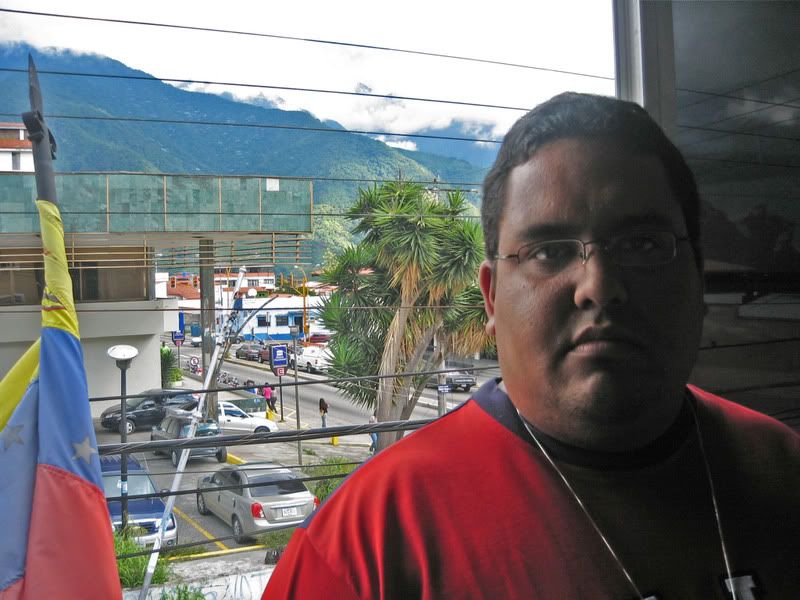


Kendra Fehrer Ponniah is is a Ph.D. student in Development and Anthropology at Brown University, in Providence, RI. This article is based on research she conducted in January and December of 2006 and June of 2007, interviewing communal council members from seven communities near Barquisemeto, Venezuela.

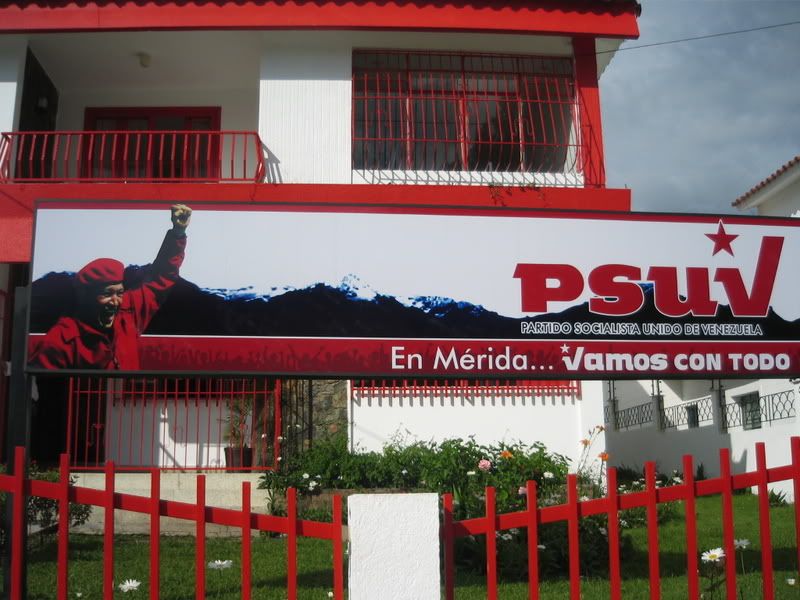
In mid-2006, several months before the presidential elections, the Venezuelan government headed by left-leaning President Hugo Chávez passed a new law. The law was called the Law on Communal Councils, and it was a cornerstone of the new political strategy to deepen democratic participation in Venezuela. As of June 2007, there were 20,000 registered communal councils across the country, plus tens of thousands more in formation. Televised speeches from the floor of the national assembly referenced the communal councils as the pivotal means of social change in Venezuela. On the tall walls of the subway stations in Caracas, gigantic red murals proclaimed the communal councils as an engine of Venezuela's transition to 21st century socialism.
From Representative to Participatory Democracy
The communal councils are essentially neighborhood assemblies with political and fiscal powers. As described in the law, they function as neighborhood planning councils, responsible for decisions regarding infrastructure and planning-for example, where to set up the new multi-purpose sports court or what sorts of services to request for disabled youth within the community. In addition, the councils can initiate their own projects with funds obtained from the federal, state, and municipal governments and they are expected to bring together under one umbrella representatives from various community groups.
A typical communal council is made up of about 20 people, elected by a community of no more than 400 families. The geographic basis of the communal council allows members to know each other, precipitating an accountability that most representative politics fail to achieve, and furthermore ensuring that political and economic decisions made by the council are embedded in the social framework of the community.
The communal councils diverge from the typical representative democracy in one other significant way. All decisions made by the communal council can be reversed by popular vote. The vote, taken in assembly (at which 20% of all persons over 15 in the community must be present), is binding.
Community members seem to sense that this emergent form of local government is profoundly different from the previous form, in which political participation occurred once a year at the voting booth. A sentence heard over and over among community organizers is that the communal councils are transforming Venezuela into a "participatory" democracy, rather than a "representative" democracy. The communal councils provide a structure for direct democratic participation.
The potential impact of communal councils to transform the Venezuelan social and political fabric is no doubt exciting. However, like all processes of change, this one is not without challenges.
Confronting Bureaucracy
The situation faced by La Tamaca*, a neighborhood outside the city of Barquisimeto is emblematic of the challenges many community organizations face. The residents had pooled their recourses to construct a wall that would separate their community from the uninhabited land behind their homes. Together they had raised over $30,000 Bs. (10,000 USD) to complete half the wall. Once the community established a communal council, they applied for funds from the municipal government to complete the construction. The municipal government granted those funds, nearly twice what the community itself had raised, to complete the second half of the project.
The catch was, despite strong objections from the community, that the municipal government declared that it would now manage the project.
Instead of hiring workers and contractors from within the community, the municipal government hired its own contractors and suppliers. Five months later, the funds had run out, and the remaining half of the wall was only partway done.
Even with the many pro-poor initiatives over the last decade of Chávez's administration, communities are still fighting for a voice. The efforts of many, like La Tamaca, are being frustrated by the "politics as usual" attitude of many municipal and state governments. In the words of one community member: "We have a lot of public officials who are reactionaries dressed up as revolutionaries. They are more interested in their jobs than in this [revolutionary] process."
One of the purposes of the communal councils, according to a high ranking government official, is precisely to address this problem. By creating a direct link to the president and federal ministries, the communal council structure allows organized communities to bypass, or at least challenge, the clientelistic bureaucracy of municipal and state governments. Under the new law, communal councils can apply for funds directly from the Ministry of Participation and Social Development. However, some critics argue that this structure creates the danger of too much national control over grass-roots community structures.
City Council or Social Movement?
At their best, the communal councils can be used as political leverage to represent community interests at odds with the local government institutions. "Hidrolara [the public water company] is defunct," proclaimed Ismila, a community organizer in a working class neighborhood to the east of Barquisimeto. For the previous two days raw sewage had been backlogging into the streets along ten blocks of the neighborhood, including the block in front of the community health clinic. Despite numerous calls to the engineer appointed to their area, the engineer had been delaying his arrival. After he missed the appointed time for the second day in a row, five members of the communal council decided they needed to take more immediate action. They called four more colleagues from the council and caught a ride into the city center, where the Hidrolara offices were located.
At the office, they demanded to speak to the person in charge of emergency maintenance. Two hours later they left with an engineer to remedy the problem. Ismila said: "We learned today that Hidrolara is useless as an institution, it does not work for the communities. These officials think they know everything and don't listen to the community until there's a problem."
Some state and municipal institutions in Venezuela serve particular political interests, rather than the public good. When the public institutions do not fulfill their ascribed duties, the communal councils like that in Ismila's neighborhood can apply pressure. Although the council itself did not have jurisdiction over the water system, through their recognition as a communal council they have the political resources to apply political pressure to ensure the democratic distribution of water.
Not all communal councils are as politically astute as Ismila's, but a surprising number are. The community members who participate in the communal council possess a wide range of political experience, from complete novices to seasoned community organizers. Commonly, a communal council will contain five or six long-term organizers who see the communal council as simply the newest framework for emancipatory politics. It is often these more experienced organizers who are instrumental in forming the communal council.
In the case of Ismila's community, the communal council formed out of the Health Committee. The Health Committee was established several years ago, when the community was told that they were eligible to receive a Cuban doctor in the community. "There are lots of rumors that the doctors are there to hurt people, they don't have proper training, etc. We had to educate the community that this wasn't true. Thankfully, the doctor we got was very good and little by little, people stopped being afraid and came. When we heard about the communal councils law, we knew we had to get involved. Now the Health Committee is a working group of the communal council." The communal councils serve the powerful political function of coalescing a variety of community efforts.
Does Pluralism Include the Anti-Democratic?
Contrary to the perception by many of Chávez's critics, the communal councils are not composed exclusively of flag-waving Chávez supporters. In the town of El Cují, communal council member Mirabel identifies as the opposition. During the last elections, she transformed her home into a "hot corner," a common opposition protest tactic, which involves blasting anti-Chávez music onto the street and blaring sirens every 15 minutes to signify that Venezuelan democracy "is under attack." Why does she participate in the communal councils? "To keep an eye on the Chavistas," she responds, "to make sure they're not mishandling funds."
Opposition to President Chávez is located mainly, but not exclusively, in the small, active, and largely unencumbered middle and upper classes. Although some communal councils have been formed in elite neighborhoods, these do not represent the majority. The majority of communal councils are in poor and working class neighborhoods.
Still, even within poor communities, a minority do tend to identify as opposition, often because of enduring affiliation with the previously dominant parties. So, not infrequently, a communal council will have several staunch opposition members.
Despite the highly charged political rhetoric around the communal councils as a key element of the Bolivarian Process, within the actual meetings of the councils party-politics are seldom discussed. More often, topics of discussion deal with urgent community needs. Instead of playing a divisive role in the community, the communal councils appear, in some cases, to be fulfilling a reconciliatory role. Through regular interaction in meetings, often accompanied by socializing outside formal gatherings, the communal councils are becoming a space for breaking down political barriers.
Although pluralism is a central tenet of a democratic society, when some of those diverse constituents are actively anti-democratic the situation becomes a bit more complex.
While the minority opposition represents its position as one of advocating for democratic rights, the democracy for which the opposition advocates is essentially a liberal democracy, bent on the protection of private property and individual rights. It is precisely this form of democracy that has prevailed in Venezuela historically, and which the current government is trying to transform. The model proposed by the opposition conflicts with Venezuela's emergent radicalized democracy, which seeks to expand collective rights and responsibilities. For example, the constitutional reforms rejected in a referendum on December 2, 2007 included language to create three new types of collective property.
Why do political frameworks matter to the communal council? Although opposition and pro- Chávez residents can agree on addressing urgent community needs, the types of solutions offered to neighborhood problems could be vastly different. A liberal democratic model is not incompatible with the neoliberal framework that dominated the country for the last decades. Under this model, a communal council could offer micro-credit for individual businesses, without precipitating any shift in consciousness towards new notions of collective responsibility and social development.
One project I observed did just that. An organizer from another council explained, "The communal council gave out loans for everything, to start a phone stand, to buy motorcycles to use for ëmoto-taxis', to start hair salons… there was a lot of individual profit, but not a lot of community benefit." In contrast, a reconfigured democratic model would value not only the material benefits to the individual, but how the collective would benefit, both materially and in terms of participation.
The communal councils do not have an easy task. They face the challenge of maintaining political pluralism, challenging entrenched political and economic interests, and responding to the demands of a population whose basic needs have been ignored for decades. As one long-time activist said with both optimism and concern, "The communal councils are our primary hope for the long-term success of the revolution. They have the potential to change the very fabric of this country."