LA ESQUINA CALIENTE (THE HOT CORNER) - A STUDY OF PARTICIPATORY DEMOCRACY IN ACTION AROUND THE WORLD

PARTICIPATORY DEMOCRACY vs REPRESENTATIVE DEMOCRACY

We as citizens of the United States observe politics from afar and the vast majority of us may participate in the political process only to the extent that we go to the polls once a year to vote. We may endeavor to follow the news accounts of our nation's politics as they unfold, and of the consequences those political actions yield, but we have little power to influence our "democratically" elected officials. Perhaps we write an occasional letter to our senator or representative, but we almost inevitably receive a vague and impersonal response explaining why they will vote in our opposition.

Over the decades, our representative democracy has been systematically undermined and has ultimately failed in preserving the well being of the people of this nation. The system that the founding fathers painstakingly devised in order to best serve the interests and the will of the people has been corrupted and the systems of checks and balances on power that they instituted have been stripped away. Most of us accept this reality as being beyond our control and continue to observe, comment, and complain without aspiring to achieving any real change, without any hope of instituting a new system of governance that would instead take directly into account your views, and the views of your neighbors, and would empower you to make real positive change possible in your communities.

This site will attempt to explore in depth the places in the world where people are successfully bringing about that type of change in the face of similar odds, where an alternate form of democracy, which is called participatory or direct democracy, is taking root. Initiative, referendum & recall, community councils, and grassroots organizing are but a few ways in which direct/participatory democracy is achieving great success around the world.

Our system of representative democracy does not admit the voice of the people into congressional halls, the high courts, or the oval office where our rights and our liberties are being sold out from underneath us. Our local leaders and activists in our communities, and even those local elected officials who may have the best of intentions are for the most part powerless to make real positive change happen in our neighborhoods, towns and villages when there is so much corruption from above.

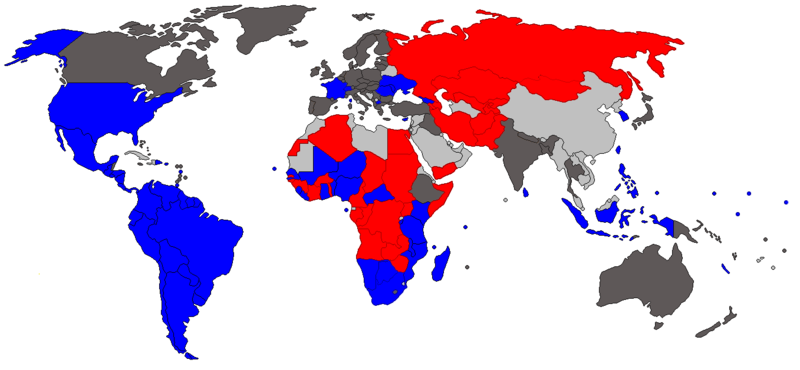
In places like Venezuela, Argentina, Bolivia, Nicaragua, Ecuador, Brazil, South Africa, India, and the Phillipines, new experiments in grass roots community based governance are taking place. There is much to be learned from these and other examples of participatory democracy from around the world when we try to examine how this grass-roots based governance could begin to take root here in our own country in order to alter our political system so that it might better serve the American people.

In the hope that one day we can become a nation working together as a united people practicing true democracy as true equals, we open this forum…

LATEST ENTRIES:
Showing posts with label Participatory Environmental Management. Show all posts

Friday, November 14, 2008

Participatory Democracy for Social and Ecological Justice


Sharing insights on a range of issues

BEIJING EXPRESS
By CELESTE FONG


Source:
http://thestar.com.my/news/story.asp?file=/2008/10/26/focus/2379810&sec=focus

PRIOR to the meeting of Asian and European leaders in the Chinese capital for the Asia-Europe Meeting (ASEM) on Oct 24 and 25, more than 500 people from key grassroots, activist networks, and non-governmental organisations from Asia and Europe gathered at a three-day forum themed “For Social and Ecological Justice” here.

Since 1996, the Asia-Europe People’s Forum (AEPF) has been held every two years, normally before the ASEM, and AEPF participants gather to discuss a range of issues, exchange views and share insights.

For the Seventh Asia-Europe People’s Forum, the discussions were organised in three clusters: peace and security; social and economic rights and environmental justice; and participatory democracy and human rights.

With the onset of the current global financial crisis, the forum’s delegates called for a re-design of the global financial system, saying that Europe and Asia should take the initiative.

“So, once again we stand at a historical moment in a sombre mood, surveying the wreckage of crises that are both long-term and of immediate consequence; of crises that are both structural and conjunctural; of crises that demand not cosmetic reforms but a deep-rooted and sustainable transformation of how we shape the global order,’’ said Klang Parliamentarian Charles Santiago, one of the speakers at the forum’s opening ceremony.


Santiago: ‘Developing countries like China, India and Brazil could lead the world in re-setting a new financial rchitecture.’ — By Celeste Fong
Santiago, who is also director of Monitoring Sustainability of Globalisation, called for ASEM leaders to tell the global community from Europe and Asia that the unfettered deregulation of markets has to stop!

“Developing countries like China, India and Brazil could lead the world in re-setting a new financial architecture,” he added.

In his speech, he said govern ments, regional organisations, and international institutions like the IMF and World Bank have “all scrambled in unseemly haste to bail out their benefactors through subsidies for the rich.

“How ironic that the ‘free markets’ are today totally dependent on state intervention.

“The capitalist state is fulfilling its historic task of providing all the necessary guarantees for the survival of property.”

What is peculiar about the 2008 financial crisis, said Santiago, is that it is taking place alongside a food, energy and ecological crisis.

“It humbled the world’s economic super powers. They are asking developing countries like China to help solve the credit crisis through coordinated interest rate cuts,” he said.

China’s recent move to cut interest rates twice in three weeks is widely seen as part of a global collaboration to counter the crisis and an important contribution to the rest of the world.

Heidi Hautala, an experienced Green politician and a member of the Finnish Parliament, told the forum that the whole world is now feeling the consequences of an unprecedented collapse of the financial system.

“AEPF has consequently promoted the replacement of blind pro-market policies by alternative people-centred policies,” she said.

“We noted in Helsinki that ASEM countries control over half of the world’s gross national product. Thus, ASEM could be a key mechanism to lead the world on a sustainable path.

“To us, it is very clear that ASEM can only succeed if civil society gets access to it.’’

At the opening ceremony, Chinese Foreign Minister Yang Jiechi voiced his hope that the forum would play a positive role in promoting people-to-people exchanges and cooperation between Asia and Europe and in pushing forward the ASEM process.

“It (the forum) will also make a unique contribution to maintaining world peace, stability and prosperity and promoting human progress and development,’’ he said.

Yang said the recent turbulence in the international financial market has dealt a blow to the world economy and aroused the concern of the entire international community.

“No country in the world can expect to stay away from such issues as global warming, environmental degradation, resource shortage and the increasingly grave international economic and financial situation or address them on one’s own.”

After the three-day discussions, the AEPF called for a fresh policy agenda to address economic policies which take into consideration ordinary people, human rights and the environment.

The AEPF’s final declaration, including the call for a broadened agenda like governance and human rights issues, environmental sustainability and people-centred development, would be passed to the ASEM meeting which began on Friday.

Besides Santiago, who is also a member of the international organising committee of the AEPF, other Malaysian participants included Monash University School of Arts and Sciences lecturer Wong Chin Huat, PAS’ Capt Muhd Alimin Aziz, MBPJ councillor S. Ramakrishnan and other representatives from Malaysian NGOs.

Sunday, July 27, 2008

Switzerland: Direct Democracy and the Environment

As this article illustrates, environmental groups have been able to implement conservation measures using Swiss direct democracy. Initiative and referendum allow the populus to protect their environment and ecology when higher powers in government and industry may have no incentive or desire to do so. - Editor


Switzerland ranks No. 1 in the green index, scoring near-perfect marks.

Source: http://www.newsweek.com/id/143682

For a glimpse of primeval Europe, head for the high mountains of eastern Switzerland. In the wild scenery of the Swiss National Park, the authorities have sought to re-create the conditions that prevailed 5,000 years ago. No trees are felled, no meadows mown and no animals hunted. The ibex and the bearded vulture, once driven to near extinction, now flourish again after their reintroduction in the last century. Wolves have returned to the region, and so has the occasional bear.

A rare gesture to nature conservation from a nation famously devoted to commerce? Not so. When it comes to environmental protection, the Swiss can point to tradition. As far back as 1914, the nation created the oldest national park in the Alps or anywhere in Central Europe. And the tradition persists with a heap of legislation that establishes more than 20 new national parks. Small wonder that the country took first place in Yale and Columbia's Environmental Performance Index with a set of near-perfect marks.

It's an achievement that few would challenge. More than half the forests that cover 30 percent of the country have gotten Forest Stewardship Council certification, the international hallmark of good practice. In the EPI, Switzerland scored 65 in the effectiveness of its conservation measures, compared with an average of 25 for its neighbors and 51 for others of similar wealth. This is all the more impressive considering its population density—176 people per square kilometer, more than twice the figure for Greece, largely concentrated in the valleys and lowlands. The country has managed to juggle the needs of people with the needs of its wildlife, earning it more than double the average European score for biodiversity. "You can swim in any of our lakes, and turn on any tap and drink the water with pleasure," says Hans-Peter Fricker, head of the Swiss office of the World Wide Fund for Nature.

Why such dedication? One explanation begins with history and the importance of the Alpine landscape in the national psyche. The four original cantons that came together to form the nucleus of the Swiss nation in the 13th century encompass spectacular mountain landscapes. "The Alps are part of the whole Swiss mythology," says Reto Soler, Swiss representative of the International Commission for the Protection of the Alps. "It is where Switzerland was born."

Environmentalists have taken advantage of Swiss direct democracy, which allows citizens to demand a referendum on the issues of their choosing. The current construction of the world's longest and deepest rail tunnel beneath the St. Gotthard massif in the Alps—to divert heavy freight traffic off the roads—follows a national vote. So, too, did moves to ban heavy foreign trucks.

More than 40 years ago Parliament passed laws to protect wetlands, meadows and Alpine streams and glaciers. Care for the environment is now written into the Constitution. An article added in 1996 explicitly obliges the government to promote sustainable farming and the upkeep of the rural landscape. New parks, seen as a boost for tourism and conservation, will be scattered across the country.

On the environment, this nation isn't standing still.

© 2008

Saturday, March 22, 2008

UK: The 'Transition Towns' Movement

Photo: Transition Town Public Meeting
The following article discusses the transition town movement in the UK which uses the participatory model to address the pressing evironmental and energy issues that will shape the future of towns and communities and affect their viability and habitability in the near future. By seeking citizen participation in major decision making on such important issues and the design of measures that will be taken to address them, people are not only able to have their voices heard, they are also instilled with a heightened sense of responsibilty for their communities, and a greater level of political participation on all issues. - Editor

Voices of Descent


Addressing climate change can seem a colossal task. Melanie Jarman reports on the emerging ‘transition town’ movement, which is encouraging citizens’ participation in long-term planning to change energy use at a local level.

Under the catchy title of Transition Town Totnes, the south Devon town is the first in the UK to explore what it means to undergo the transition to a carbon-constrained, energy-lean world at a local level. By consciously planning and designing for changes on the horizon, rather than reacting to resource shortages as they are thrust upon them, the participants hope that their town will become more resilient, more abundant and more pleasurable than the present.

The seeds of the transition town idea lie in the small Irish town of Kinsale, where in 2005 a group of students at the local further education college developed a process for residents to draw up an ‘energy descent action plan’ - a tool to design a positive timetabled way through the huge changes that will occur as world oil production peaks. The action plan covers a number of areas of life in Kinsale, including food, energy, tourism, education and health.

For example, for food, the plan envisions that by 2021 the town will have made the transition from dependency to self-reliance, where ‘all landscaping in the town comprises of edible plants, fruit trees line the streets, all parks and greens have become food forests and community gardens’. As a practical step towards this, the plan recommends the immediate appointment of a local food officer.

For housing, the plan envisions that by 2021 ‘all new buildings in Kinsale will include such things as a high level of energy efficiency together with a high portion of local sustainable materials’. A suggested immediate practical step towards this is a review of current building practices and future development plans.


The energy descent action plan approach landed in the UK when a Kinsale college tutor, Rob Hopkins, moved to Totnes and held a number of talks and film screenings to introduce the idea. In September 2006 Transition Town Totnes was launched, seeking ‘to engage all sectors of the community in addressing this, the great transition of our time’ and seeking to put ‘Totnes on the international map as a community that engaged its creativity and collective genius with this timely and pressing issue’. The initiative has spread beyond Totnes just one year on; towns and villages around the UK have started developing a transition town approach for themselves.

One reason why the initiative has caught people’s imaginations is that, at its core, is a hopeful message. Many ‘transitioners’ are motivated to change energy use patterns not just because of energy shortages in the future but because of self-imposed energy rationing now - because cutting fossil fuel use is essential if climate change is to be lessened.

The transition movement shakes off the usual gloom and limitation around this message by calling for positive and pro-active changes. These are based in how the world actually is, rather than how we would like it to be if only someone, somewhere, would come up with that miraculous solution that will allow us to expand infinitely and indefinitely, all within a finite world. Rather than a vision of deferred promise and baseless hope it offers community-wide participation to find realistic and workable answers.

Whether the transition town approach can work at a citywide level, or whether its call for reduced consumption will have a wider impact on, for example, international trading systems and their inherently heavy use of fossil fuels, remains to be seen. In Totnes, at least, the creation of new businesses and land use initiatives suggests that the transitioners are in it for the long haul.

Monday, January 28, 2008

Direct Democracy in the Streets: The People Find Their Voice in China


People in China are increasingly coming to the realization that their voice matters in the 'new China.' They are engaging more and more in the democratic process in their own communities through direct action in the streets, and achieving real results as the government comes to it's own realization that avoiding popular unrest and economic disasters helps keep the Chinese economic powerhouse better oiled than exclusion and repression. When the government in the southern port city of Xiamen developed plans to construct another chemical plant within a mile of residential areas, a coalition of residents transcending class boundaries united and launched an impressive campaign of marches, demonstrations and cell phone text messaging which led the municipal government to suspend the plans in June '07 pending an environmental assessment (See first article below). As the second article below, which provides an update from Dec. '07, illustrates, the struggle for more direct democractic involvement is not an easy one and will require perseverence and continued public pressure. - Editor


China Calls on Xiamen to Rethink Chemical Plant

Jun 2007 04:41:13 GMT
Source: Reuters
Alert Me Printable view Email this article RSS [-] Text [+]


BEIJING, June 7 (Reuters) - A top Chinese environmental official called on the southern city of Xiamen on Thursday to rethink its plans to build a chemical plant after the prospect caused thousands to march in protest.

Pan Yue, deputy head of China's State Environmental Protection Administration, also admonished local officials for not taking seriously the importance of environmental assessments, which he said could head off such conflicts.

"We hope the Xiamen city government can consult on the plan and make appropriate adjustments and do its utmost to change the current juxtaposition of the industrial park and the neighbourhood," Pan said in a notice on the ministry's Web site (www.sepa.gov.cn).

Thousands of protesters marched through the city last week, demanding the government scrap its plans to build the plant to make paraxylene (PX), a compound used in polyester and fabrics, denouncing it as a threat to Xiamen's seaside environment.

The city had already said it would suspend construction and do another environmental assessment, but protesters demanded the government scrap the project altogether, something the Xiamen mayor said he would consider depending on the outcome of the impact study.

Pan said Xiamen had been dragging its feet on the new assessment and urged it to step up the process.

"Presently, several major incidents of environmental conflicts are because in city plans, environmental impact has not been appraised," he said. "Environmental assessment plans are a profound means to limit the environmental risk from the process of rapid industrialisation and urbanisation."

Pan also cautioned that building chemical plants near residential neighbourhoods could spur popular unrest, which China's Communist leaders are at pains to avoid.
"Many localities and departments do not give sufficient importance to environmental impact assessment plans in city planning, which can cause chaos (and) inappropriate industrial structures ...," he said.

Environmental pollution, a consequence of decades of unchecked economic growth in China, has led to demonstrations and riots around the country, from uproar over a battery plant in the eastern province of Zhejiang to a run on bottled water in the northeast after an explosion at a chemical plant poisoned tap water supplies.

Pan said local governments should consult with citizens, but appealed to residents to act calmly. "We also hope public participation is according to law, rational and can form a healthy interaction with the government."


Locals Oppose Xiamen Chemical Plant at Public Hearings

http://www.chinaview.cn/index.htm 2007-12-14 20:31:34 Print

By Xinhua writers Li Jianmin, Li Huiying


XIAMEN, Dec. 14 (Xinhua) -- Almost all the speakers at two public hearings in Xiamen this week objected to plans to restart the construction of a controversial chemical plant that was suspended earlier this year following persistent public protests.

A senior government official of Xiamen also promised at the conclusion of the hearing on Friday that Xiamen government will properly deal with the environment assessment."

"The phase of public participation (in environment assessment of the project and Xiamen's future development) has ended," Zhu Zilu, secretary-general of the Xiamen municipal government, told the participants at the hearing. "And I assure you that the municipal government will undoubtedly follow the requirements of 'Scientific Outlook on Development' and properly deal with the environment assessment."

The Scientific Outlook on Development has been a new doctrine of the Chinese Communist Party that stresses sustainable economic growth and harmony between man and the nature.

Of the 107 members of public selected by lottery to represent the citizens of Xiamen at the hearings on Thursday and Friday, 91 opposed the project, 15 voiced their support, and one left without speaking. About 80 local lawmakers and political advisors were also in attendance and out of the 15 that addressed the forum, 14 spoke against the municipal government's plan to build the paraxylene (PX) plant.

Numerous members of the public hearing - who were only given a number each to identify themselves while speaking - lashed out at the project, arguing the plant would be detrimental to the environment and people's health. They said Xiamen would lose its longstanding reputation as one of the most livable cities in China.

"If you were going to pick two apples to eat, knowing that one of them was poisonous and the other was not, then, who would dare make the choice?" said a male doctor, who could only be identified as "Representative No. 31".

One woman - "No. 35" - said the existence of the plant would prompt her to reassess her living situation.

"I came to Xiamen from Guangzhou with my husband a few years ago just for its clean air and beautiful scenery. I think I'll have to leave if the plant is built," she said.

Zeng Huaqun, a local lawmaker and also a law professor at Xiamen University, said, "It's not whether the city should build it or not, it's that the project must be stopped immediately. It's time to make a decision now."

"Risks always exist in the development of chemical projects and sometimes we cannot effectively guard against them," said "No. 49".

Other citizens played down health concerns.

"I think the project will benefit Xiamen for generations. I come into contact with the chemical paraxylene in a laboratory everyday, and I haven't fallen ill - neither have my colleagues who have done so for years. I believe residents will live harmoniously with the chemical plant," said "No. 22".

"Xiamen cannot just rely on tourism for development or on scenery for attracting talented people," said Lu Shaofeng, a female local political advisor.

The representatives of the Xiamen residents were chosen on Tuesday by lottery from a total of 624 people who had registered. About 100 residents were picked as representatives and another 100were selected as alternate representatives.
The two hearings were organized by the Xiamen municipal government and lasted a total of eight hours.

The Xiamen municipal government began inviting citizens to submit their opinions on the future of the chemical project on December 5 via email, post or telephone to the municipal government or the Beijing-based Chinese Research Academy of Environmental Sciences, the organization in charge of an assessment of the environmental impact of the project.

"So far, we have received more than 3,000 e-mails, 2,000 telephone calls and about 10letters," said Shu Jianmin, deputy head of the Beijing academy. "We will classify the opinions and suggestions and provide replies conscientiously," Shu said, refusing to disclose the percentage of the correspondence that criticized the project.

No indication of when a final decision might be made was given.
Li Yanwu, director of the academy's center for environmental assessment, previously said the environmental experts would include some of the opinions and suggestions raised at the hearing in their newly completed report on the environmental assessment of the chemical project.

The Xiamen authorities put chemical project, earmarked for the city's Haicang District 16 kilometers from the city center, on hold on May 30 after coming under huge pressure from citizens virulently opposed to the project who said it is polluting and potentially dangerous.

On June 7, the Xiamen municipal government announced that the construction of the chemical project would rest on an environmental assessment. A month later, the Chinese Research Academy of Environmental Sciences was entrusted by the Xiamen municipal government to carryout the assessment. Li and his colleagues completed the report late last month.

According to an abbreviated version of the report posted on the official website of the municipal government, experts concluded that the southern area of Haicang District, the original location of the planned PX plant, was too small and inadequate for the diffusion of atmospheric pollution.

The local government had set two targets for the southern part of Haicang: to develop the area into a sub-center of the city and to create an industrial zone focused on the chemical industry. However, according to the environmental assessment report, urban planners were advised to choose one or the other, but not both.
If the city government's priority is the first target, then the area is unsuitable for the development of the chemical industry, the report said. If the latter, a number of residential buildings should be demolished, citizens should be relocated and strict controls over the chemical plants should be imposed, it continued.

If the 10.8-billion-yuan (about 1.4 billion dollars) project by Tenglong Aromatic PX (Xiamen) Co. Ltd. goes ahead, it is expected to produce 800,000 tons of paraxylene and generate revenues of 80 billion yuan (10.77 billion dollars) a year.

Editor: Bi Mingxin